


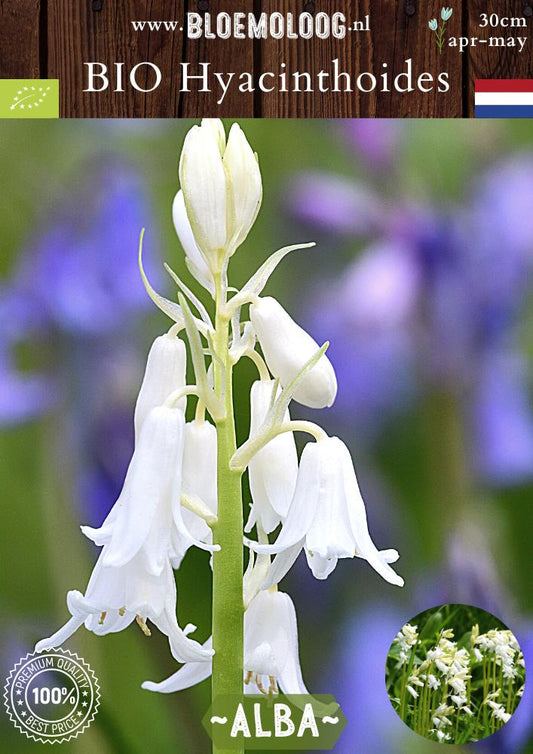

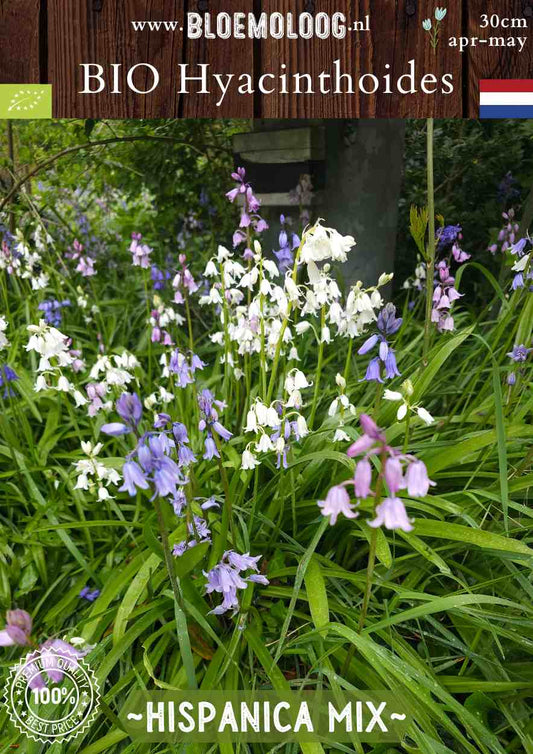

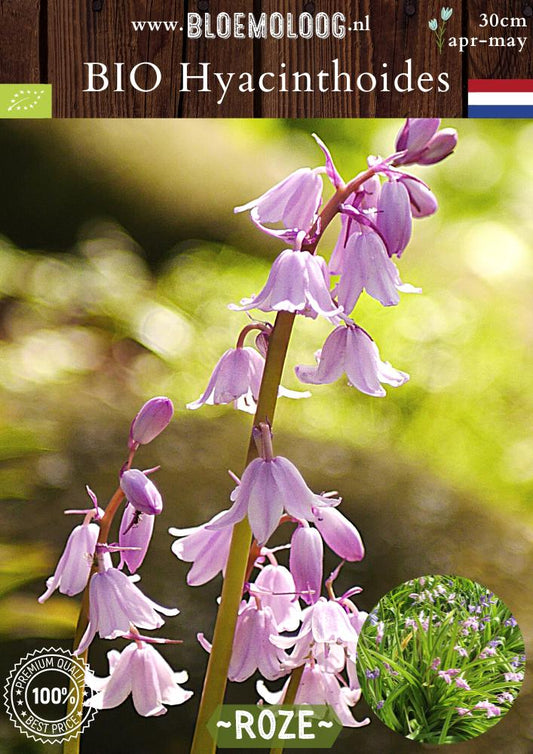

Organic bluebells for spring gardens
Bluebells, Hyacinthoides, are perennial bulbs with clusters of bell-shaped flowers. They suit light woodland gardens, hedges and spaces between later-emerging perennials. Flowering is usually in April and May, depending on species and weather. In suitable soil, bulbs can remain and gradually form larger groups.
Spanish and English bluebells
Spanish bluebell is Hyacinthoides hispanica, usually with broader, more open bells around a fairly upright stem. English bluebell, Hyacinthoides non-scripta, generally has an arching, one-sided cluster of narrower bells and a stronger scent. Hybrids also occur, making identification difficult. Check which species the product describes.
Choosing colours and combinations
Our current range includes Spanish bluebells in blue, pink, white and a colour mix. ‘Alba’ provides white flowers. Repeat single-colour groups for a calm effect, or choose a mix for a looser display. Combine with daffodils or other bulbs with overlapping flowering periods. Species and colours available vary seasonally.
When and where to plant
Plant in autumn in soil that is neither frozen nor waterlogged. Choose humus-rich, well-drained soil with moisture during growth. Light or partial shade under deciduous trees often suits them. Tree roots can leave soil very dry: shade alone does not make a site suitable. Follow product depth and spacing, planting pointed ends upwards.
Under trees, in borders or pots
Give bluebells a garden space where spreading is welcome, away from small delicate plants. Later-emerging perennials can partly hide fading leaves. Pots with drainage holes are possible but need closer attention to moisture and space. The bulbs are hardy; prolonged waterlogging remains unsuitable in winter.
Care after flowering
Let foliage yellow and die naturally so bulbs can build reserves. Water during dry growing periods, especially new plantings and pots. A thin layer of leaf compost helps care for the soil. Mow grass only after the leaves die back. Match any organic feeding to the soil and product instructions.
Naturalising and limiting spread
Bluebells can spread through offsets and seeds. Remove spent clusters before seeds ripen to limit self-seeding; offsets can still form. Divide crowded groups during dormancy and replant the bulbs you want. Spanish and English bluebells can hybridise. Keep garden bulbs in the garden, away from wild populations you wish to keep separate.
Ordering organic bluebells
Our bluebells come from certified organic growers. Orders are generally available from June to January while stocks last, with spring bulbs delivered from mid-September. In-stock items dispatch within 1–3 working days unless the product states otherwise. Check current product information and our market calendar to choose bulbs loose from the crates.
Frequently asked questions
Are Spanish and English bluebells the same?
No. Hyacinthoides hispanica and Hyacinthoides non-scripta differ in flower shape and scent; hybrids also occur.
Do bluebells need much space?
They can spread. Allow room and avoid planting directly beside small delicate plants.
Can I plant bluebells in dry shade?
Shade alone is not enough. Soil needs sufficient moisture during growth.