







Organic crocuses: small but striking
Crocuses, Crocus, grow from corms. Spring varieties bring early yellow, white and purple flowers. The blooms open wider in sunshine and stay more closed in cold or dark weather. Some crocuses flower in autumn, so always check the species and flowering months.
Botanical or large-flowered crocuses?
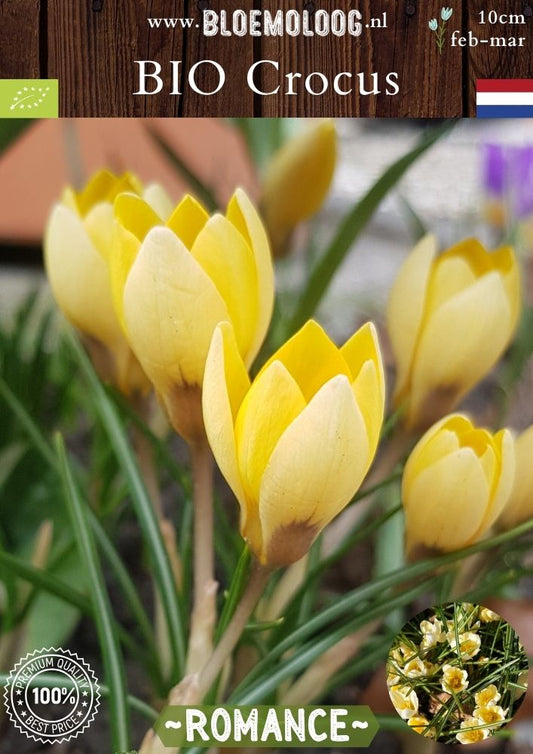
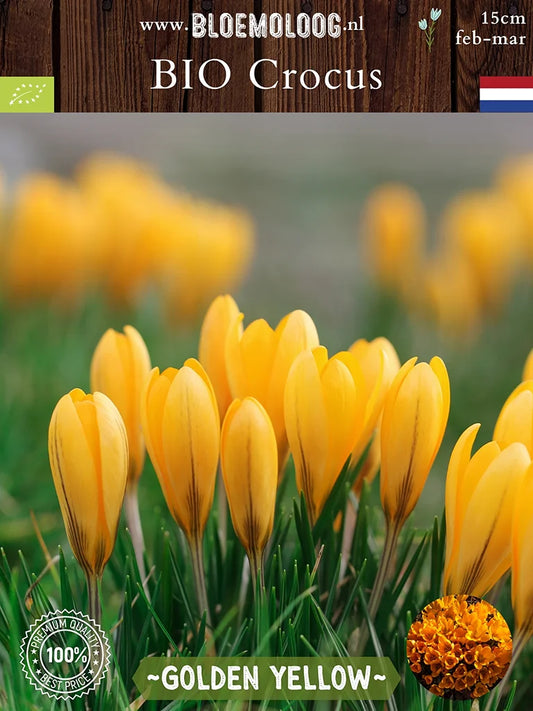
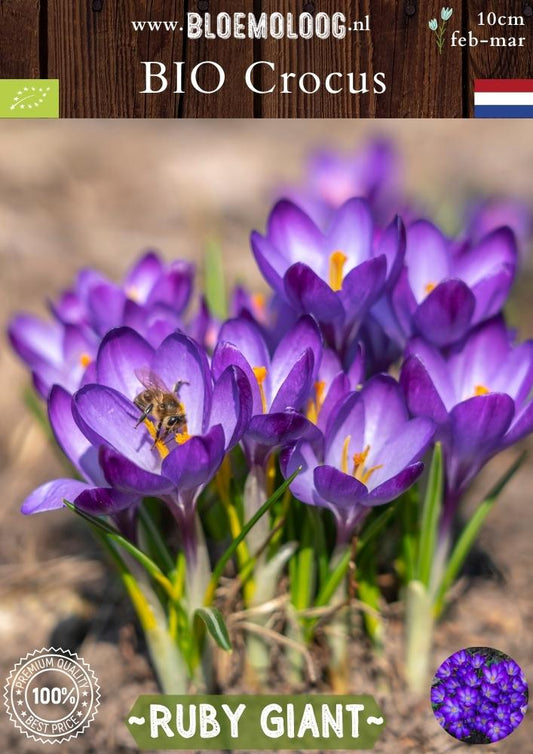
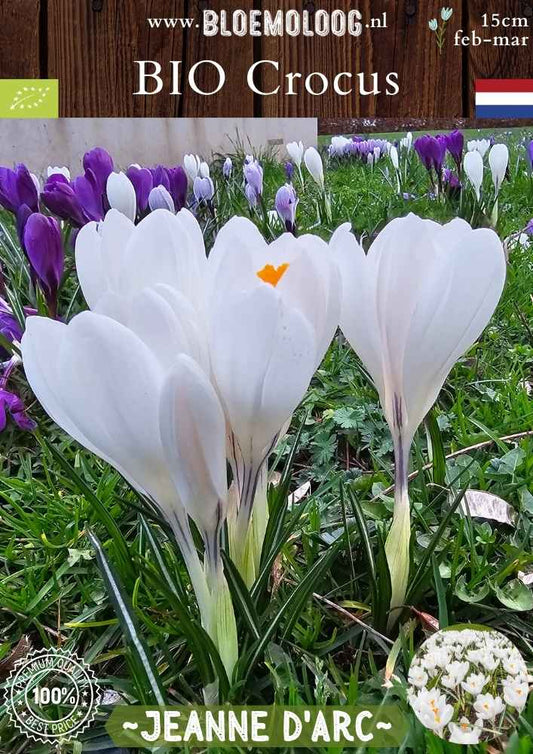
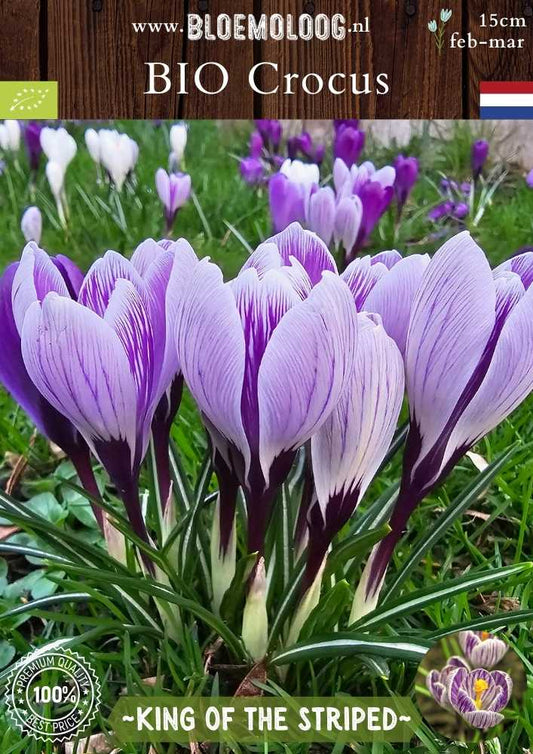
For a delicate, natural effect, try Crocus tommasinianus ‘Ruby Giant’ or Crocus chrysanthus ‘Romance’. ‘Ruby Giant’ suits loose groups in sparse grass. For larger flowers, consider Crocus vernus ‘King of the Striped’ and ‘Jeanne d’Arc’. ‘Golden Yellow’ adds warm yellow. Compare flowering times to extend the display.
Early flowers for bees
Spring crocuses offer nectar and pollen when few other flowers are available. Plant groups in a bright spot where sunshine helps the flowers open. Insect visits also depend on temperatures and flying conditions. Combine them with other early flowers to offer blooms over a longer period.
Planting and position
Plant spring-flowering corms in autumn, in unfrozen soil. Choose sun or light shade and good drainage. Deciduous trees can provide a suitable setting if enough light reaches the ground in early spring. Follow each product’s depth and spacing instructions; larger corms may need a different depth from small botanical crocuses.
Crocuses in grass and pots
Choose sparse grass where mowing can wait, away from heavily walked areas. Use pots with drainage holes, keep the growing medium slightly moist during growth and avoid standing water. In suitable conditions, crocuses can return and spread through new cormlets, at a rate that varies with the species and site.
When can you mow again?
Wait until the foliage yellows and dies back naturally. This often takes about six weeks after flowering, but follow the leaves rather than a fixed date. Mow around the groups meanwhile. Green leaves build up the new corms. Ground-grown crocuses usually need little extra feeding; check pots during dry spells.
Saffron crocus flowers in autumn
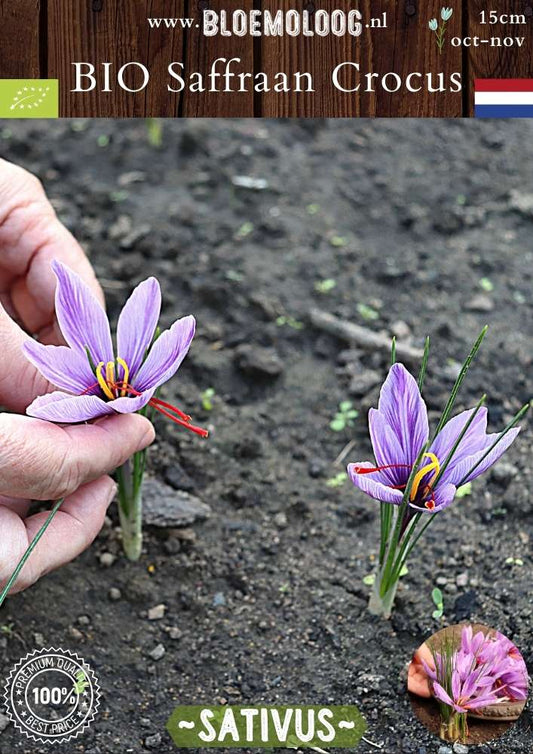
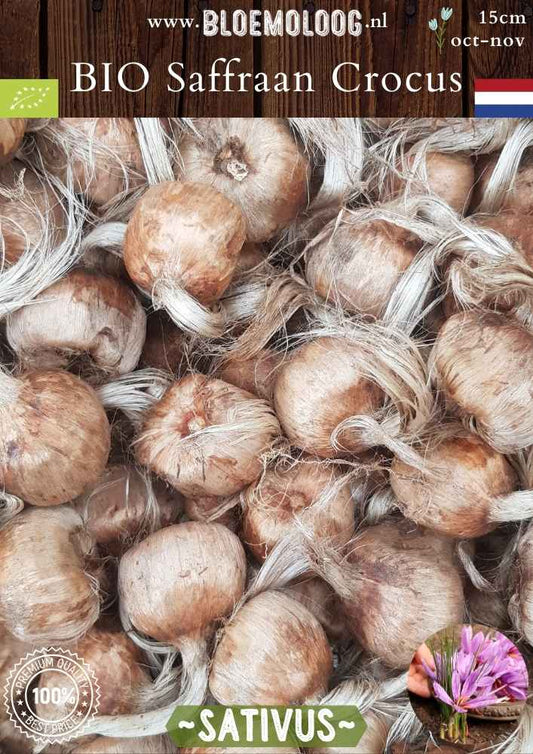
Saffron crocus, Crocus sativus, generally flowers in October and November. Plant in late summer or September in a sunny, well-drained position. Keep its leaves after flowering: they grow through winter and die back later in spring. See the separate saffron crocus collection for the relevant range and planting advice.
Ordering organic crocuses
Our crocuses are organically grown by certified growers. Spring crocuses are generally available to order from June to January, with spring bulbs delivered from mid-September. Saffron crocus availability and delivery dates are shown on its product pages. In-stock items dispatch within 1–3 working days unless stated otherwise. Check our market calendar to choose corms loose from the crates.
Frequently asked questions
Do all crocuses flower in spring?
No. Saffron crocus, Crocus sativus, flowers in autumn and follows a different growth cycle.
Can crocuses grow in a lawn?
Yes, in a suitable spot. Mow only after the crocus leaves have died naturally.
Are crocuses good for bees?
Spring crocuses provide early nectar and pollen. Choose a bright spot where flowers can open.