


Organic fritillaries for spring
Fritillaria is a genus of perennial bulbs in the lily family. Their nodding bells create a different effect from tulips or daffodils. Some remain modest, while others rise above borders. Consider height, soil and space for mature plants as well as flower colour.
Snake’s head fritillary or crown imperial?
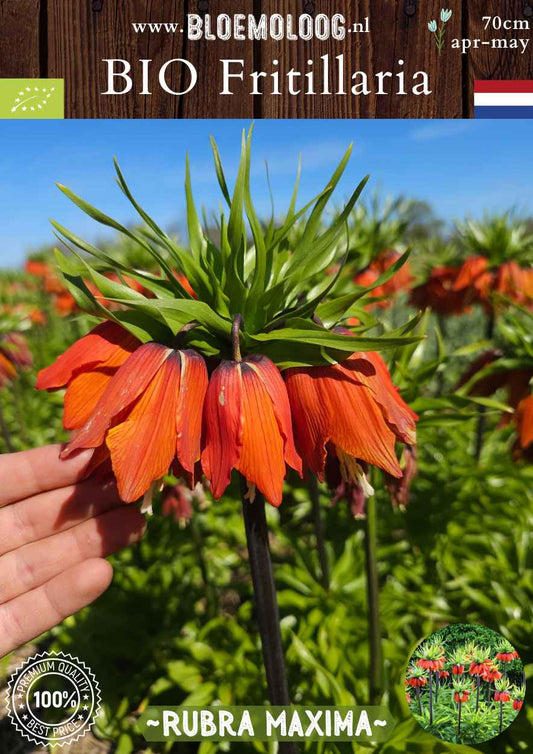
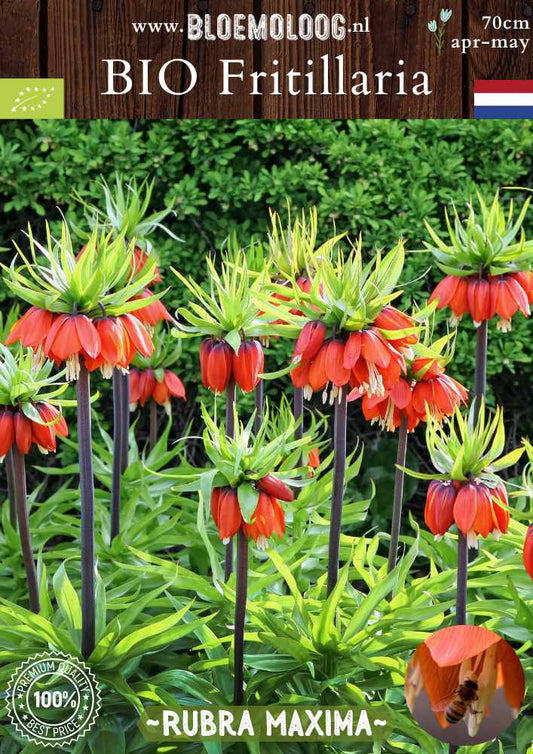
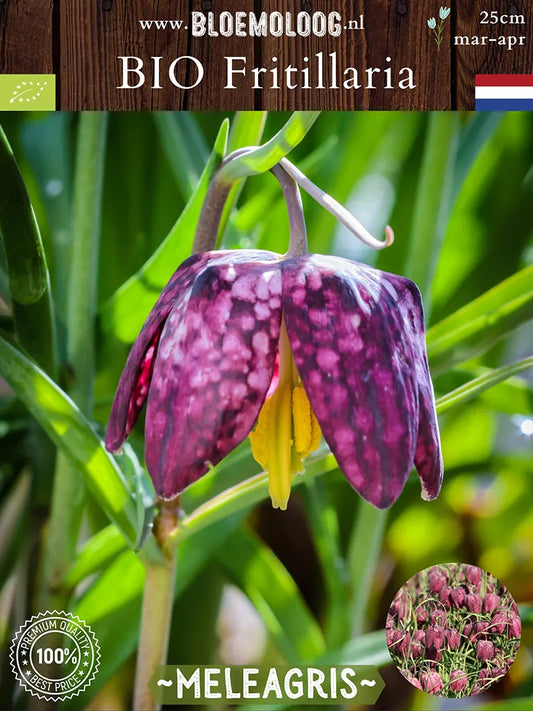
Fritillaria meleagris has delicate hanging flowers, often with a chequered pattern. Crown imperial, Fritillaria imperialis, carries a ring of larger flowers beneath a leafy crown. Our current range includes ‘Rubra Maxima’. Stock changes seasonally; check each product for available species, heights and flowering months.
Choose the position first
Snake’s head fritillaries suit humus-rich soil that retains moisture, including in summer, with sun or light partial shade. Crown imperials need a warm sunny position, fertile soil and good drainage. Moist does not mean persistently waterlogged. Choose a species suited to your site rather than applying one rule to the whole genus.
Planting fritillary bulbs
Plant promptly after delivery during the autumn planting season. Handle gently: small snake’s head fritillary bulbs dry out easily. Follow the individual depth and spacing instructions; large crown imperial bulbs need a different approach from small fritillaries. Use unfrozen soil, avoid damage and ensure excess water can drain.
Borders, pots and grass
Crown imperials stand out among perennials with room for their tall stems. Pots need enough space and drainage holes; manage moisture according to the species. Snake’s head fritillaries can grow in suitable moisture-retentive grass. Choose a little-walked area where mowing can wait after flowering.
Care after flowering
Keep leaves until they yellow and die naturally. Mow fritillaries in grass only afterwards, watering if needed during dry growing periods. Summer care differs: snake’s head fritillaries like moisture, while crown imperials dislike a wet resting place. Match organic feeding to soil and product advice. Leave thriving groups largely undisturbed.
Returning flowers, propagation and scent
In suitable conditions fritillaries can return and form new bulbs, but yearly flowering is not guaranteed. If flowering declines, check light, drainage, depth and nutrition. Divide crowded groups during dormancy; seed-grown plants often take years to flower. Crown imperials have a distinctive smell, but should not be relied on as a guaranteed mole or vole deterrent.
Ordering organic fritillaries
Our fritillaries come from certified organic growers. Orders are generally available from June to January while stocks last; spring bulb delivery starts in mid-September. In-stock items dispatch within 1–3 working days unless stated otherwise. Check the products for availability and delivery, and our market calendar for loose sales. These are ornamental bulbs, not for eating.
Frequently asked questions
Which fritillary suits moist soil?
Snake’s head fritillary suits moisture-retentive soil. Crown imperials need warmth and better drainage.
Should I plant fritillary bulbs promptly?
Yes. Plant promptly during the planting season and handle the fragile bulbs gently.
Do crown imperials reliably repel moles?
No. Their distinctive smell does not guarantee protection against moles or voles.