














What are species tulips?
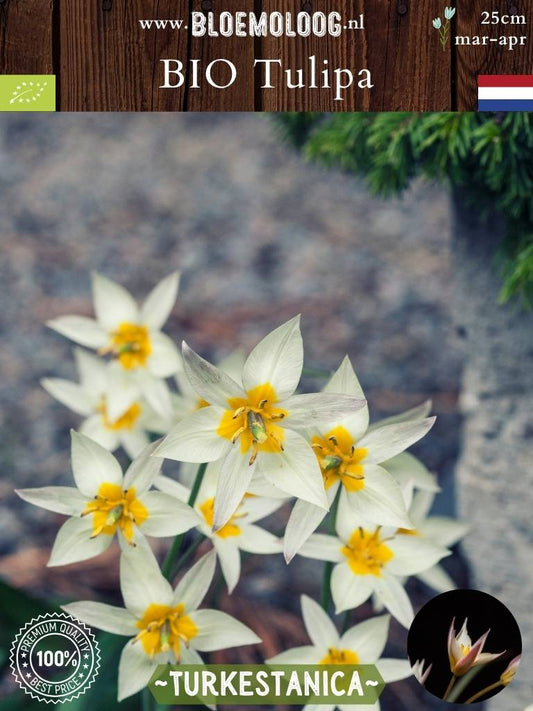
Species tulips are wild tulip species and closely related garden selections. Many are more compact than large garden tulips, but not all are short. Flower shape, foliage and flowering time vary. They suit natural groups, rock gardens, pots and borders. Wild tulip does not mean wild-collected: our range is organically grown.
Which species tulips suit you?
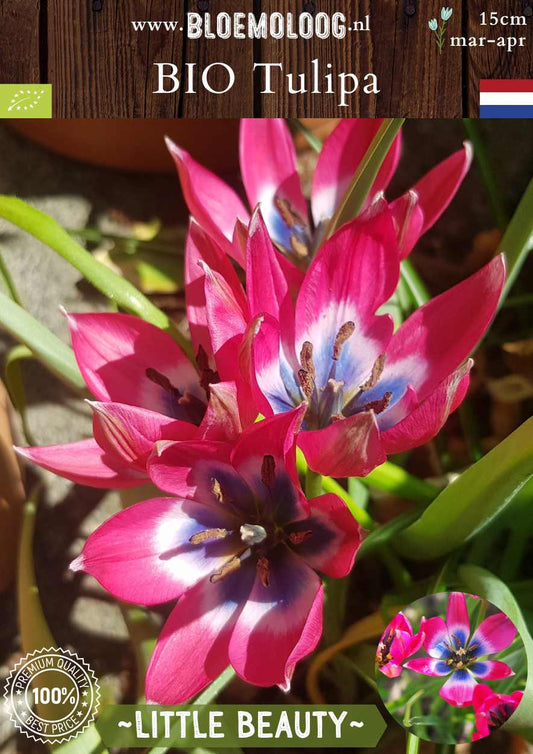
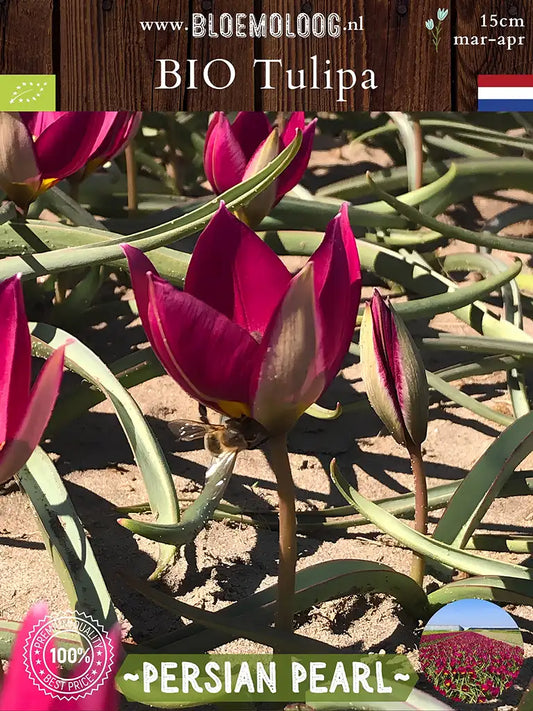
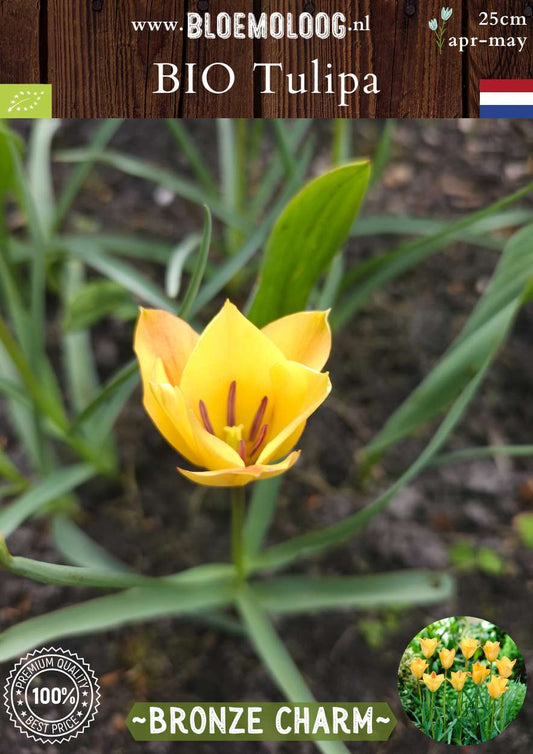
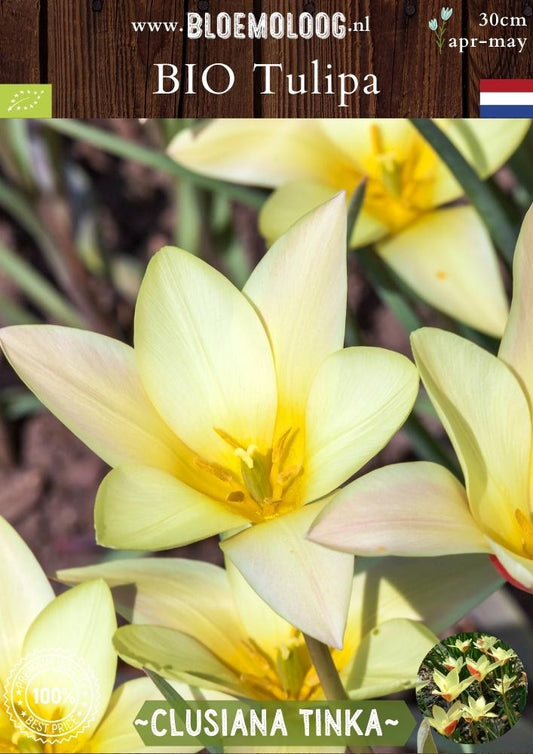
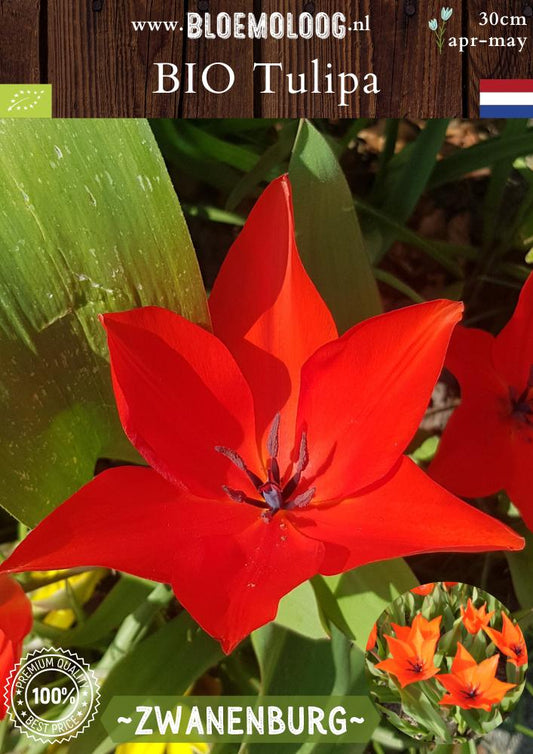
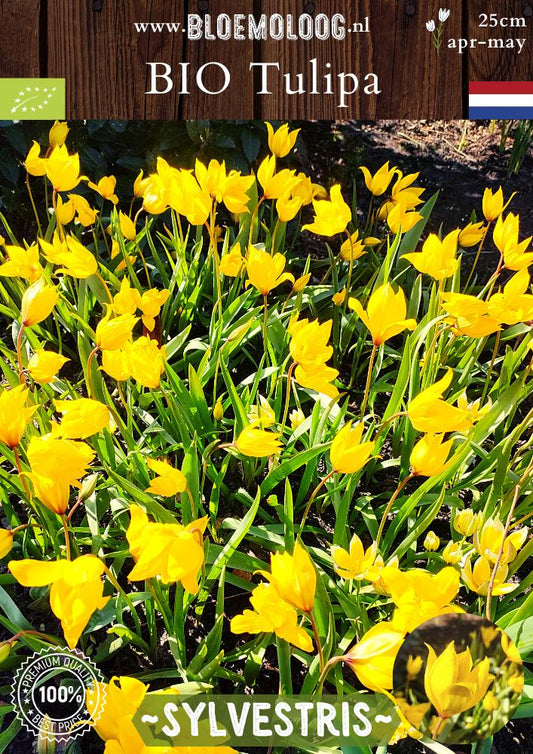
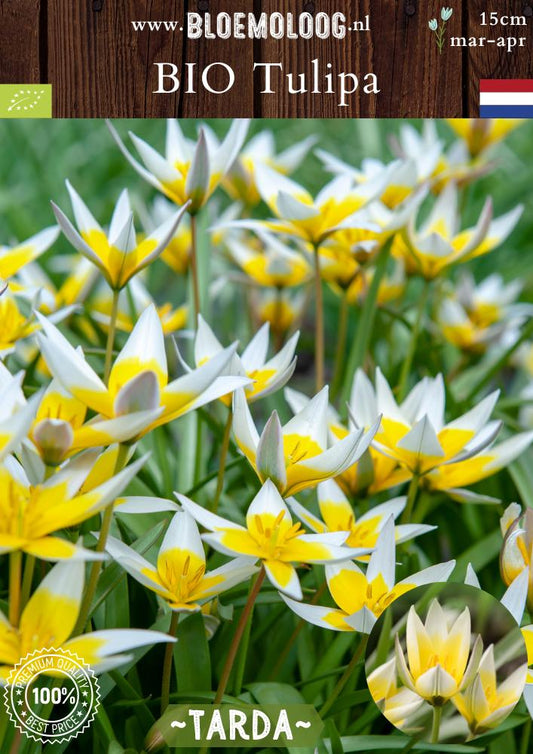
For low groups, consider Tulipa tarda, ‘Little Beauty’ or ‘Persian Pearl’. Tulipa batalinii ‘Bronze Charm’ adds warm yellow. Tulipa praestans ‘Zwanenburg’ provides red and can carry several flowers per bulb. For taller, graceful accents, consider Tulipa clusiana ‘Tinka’ and yellow Tulipa sylvestris. Compare heights and flowering months on each product page.
Which tulips return for several years?
Many species tulips can flower for several years and multiply in suitable conditions. This is not guaranteed: soil, summer moisture, light and care matter. They are not immune to disease. Choose a species suited to your garden and let foliage die naturally. Declining flowering is a reason to review the site and growing conditions.
Position and planting
Most prefer sunshine and well-drained soil, often with a relatively dry summer rest. Plant in autumn; October to November suits many tulips if the soil is neither frozen nor waterlogged. Follow the product’s depth and spacing, pointed end upwards. Tulipa sylvestris also tolerates light partial shade and more moisture-retentive soil. Acid soil is not a general requirement for this species.
Pots, borders and grass
Use pots with drainage holes and avoid standing water. A sunny position shows the flowers well. In borders, repeat small groups among perennials. For grass, choose a species and position where foliage can remain unmown after flowering. Dense, persistently wet or heavily walked lawns are less suitable.
After flowering and mowing
Keep green leaves until they yellow and die naturally. Mow only afterwards; timing varies with species and season. Remove spent flowers if you do not want seed. Water during dry growing periods, especially pots. During summer dormancy, do not automatically water as much as summer flowers; follow the selected species’ needs.
Propagation and combinations
Depending on species, new offsets, runners or seedlings develop. Seed-grown plants may take years to flower. Divide crowded groups during dormancy and replant healthy bulbs at the right depth. Combine crocuses, grape hyacinths or daffodils with complementary flowering times. Accessible flowers of many species tulips attract insects, but this varies with species and conditions.
Ordering organic species tulips
Our species tulips come from certified organic growers. They are generally available to order from June to January while stocks last; spring bulb delivery begins in mid-September. In-stock items dispatch within 1–3 working days unless stated otherwise. Check current products and delivery dates, and our market calendar for loose bulbs from the crates.
Frequently asked questions
Do species tulips always return?
Not guaranteed. Choose a suitable species and position and let foliage die back fully.
Are all species tulips short?
No. Height varies by species; compare product information before choosing.
Can species tulips grow in grass?
With a suitable species and site, yes. Mow only after the leaves die back.