





Globes on tall stems
‘Purple Sensation’, ‘Mount Everest’ and ‘Gladiator’ rise above perennials. Repeat small groups throughout the border for a harmonious effect.
Organic Allium 'Purple Sensation' - ornamental onion | 5 pcs.Organically grown · NL-BIO-01
Purple globes above the border, white flower heads among green leaves or slender drumsticks in summer: organic ornamental onions bring height and rhythm to your garden. Choose a flower shape and position that suit your space.
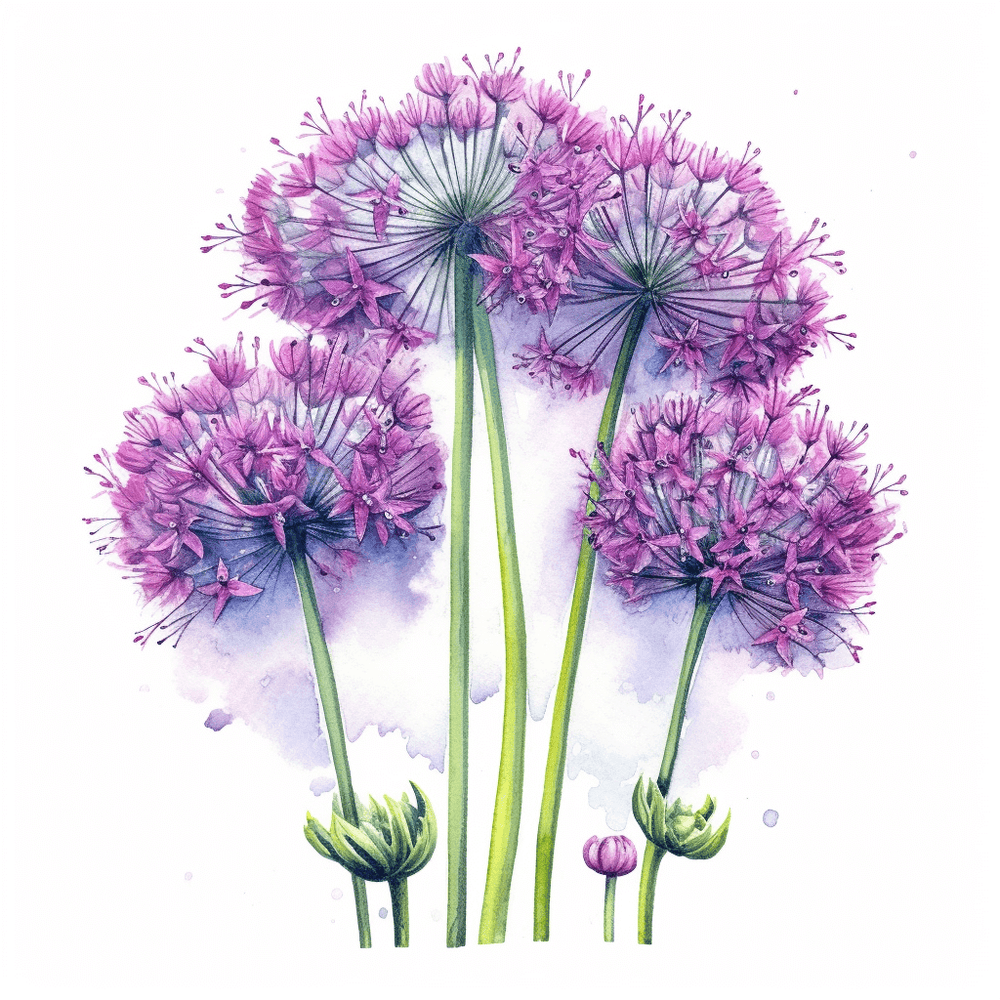
‘Purple Sensation’, ‘Mount Everest’ and ‘Gladiator’ rise above perennials. Repeat small groups throughout the border for a harmonious effect.
Organic Allium 'Purple Sensation' - ornamental onion | 5 pcs.Golden garlic and Allium unifolium suit the front of a border. Star of Persia has a large, open flower head on a shorter stem.
Organic Allium unifolium – One-leaf onion | 10 bulbsDrumstick alliums create slender upright lines among ornamental grasses and perennials. Combine flowering times to enjoy them for longer.
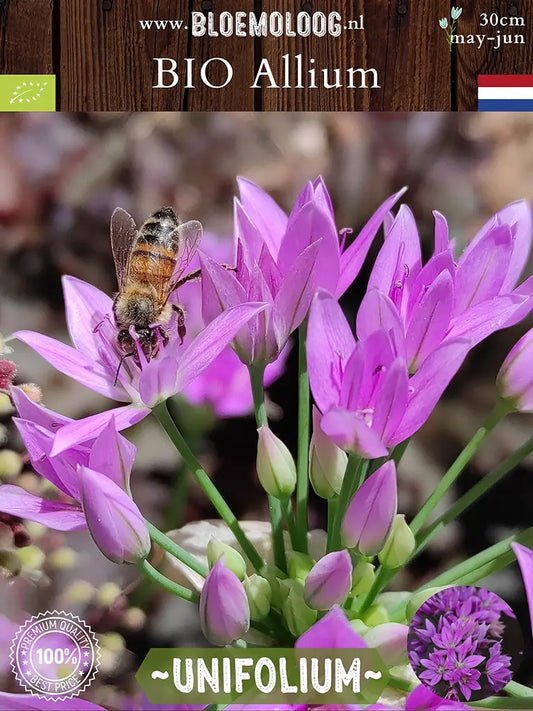
Organic Allium sphaerocephalon - Drumstick allium | 10 bulbsOrnamental onions belong to the genus Allium, alongside onions, garlic and chives. Their height, colour and flower shape vary considerably. As well as purple ‘Purple Sensation’ and white ‘Mount Everest’, you can choose yellow Allium moly ‘Jeannine’ or the soft pink flowers of Allium unifolium. Consider the space a flower head needs as well as its colour.
Many ornamental onions flower as spring turns to summer, after most tulips have finished. ‘Purple Sensation’ brings colour to the border then. Drumstick alliums, Allium sphaerocephalon, follow later and look lovely among summer-flowering perennials. Exact flowering times vary with the variety and weather. Each product lists its height and flowering period.
Plant taller alliums in small groups among perennials. Repeating a variety in several places ties the planting together. Salvias, hardy geraniums and ornamental grasses make attractive neighbours where their growing requirements match. Their foliage also helps conceal yellowing allium leaves. Lower-growing varieties suit smaller spaces, although a short stem can still carry a wide flower head.
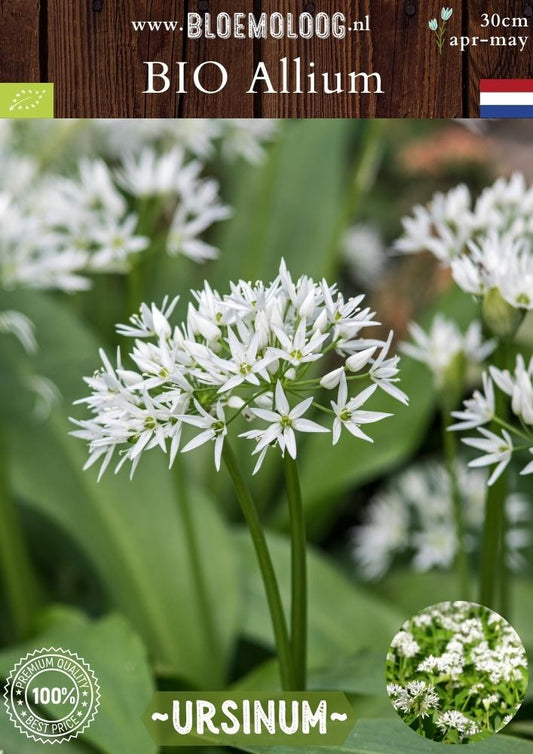
Most border alliums flower best in a sunny position with freely draining soil. Prolonged wet conditions during dormancy are particularly unsuitable. Wild garlic, Allium ursinum, prefers humus-rich soil that does not dry out and grows well in partial shade under deciduous trees. Always check the advice for your chosen variety, including when planting in pots or heavy clay.
Plant autumn bulbs in autumn, preferably from October, while the soil is neither frozen nor waterlogged. Position them pointed end upwards. A usual guideline is a planting depth of around two to three times the bulb's height; follow the product advice for depth and spacing. Allow enough room for large flower heads. Pots need drainage holes and regular checks for drying out. Garlic chives, Allium tuberosum, are supplied as perennial plants and have a different planting season from these autumn bulbs.
Let leaves turn yellow and die back naturally, even if this begins during flowering. Green leaves help replenish the bulb's reserves. Leave spent flower heads for their structure, or remove them to limit seed formation. Many alliums can return for several years in a suitable position; flowering and multiplication vary with the variety and garden. Annual lifting is usually unnecessary. Water during prolonged dry spells while plants are growing, and feed according to your soil's needs.
The many small flowers offer nectar and pollen to bees and other pollinators. Combining flowering periods extends their food supply. Bloemoloog sells only organically grown bulbs from certified growers. Our ornamental onions are intended for the ornamental garden; always consult information on the particular species before considering culinary use.
Autumn bulbs are generally available to order from June to January, while stocks last. Pre-orders are delivered from mid-September. In-stock items are dispatched within 1–3 working days; check the product for current details. To combine several ornamental onions, explore the Alliumfeest package below. You can also find us at markets and events in autumn, where you can select loose bulbs from our crates.