

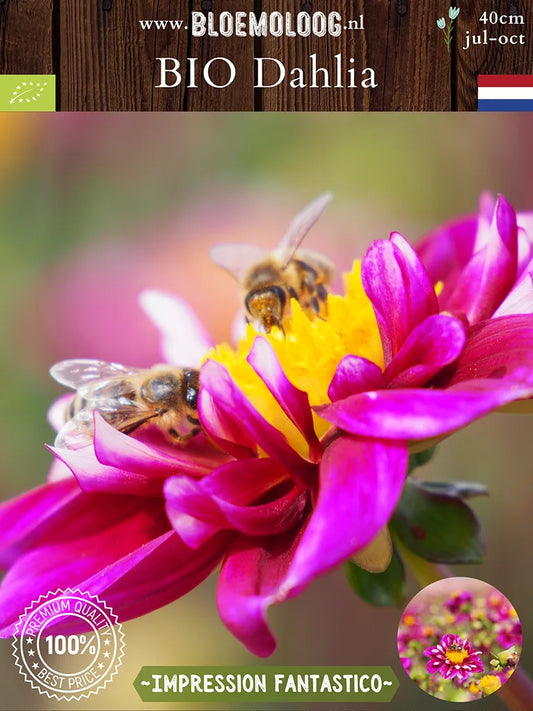

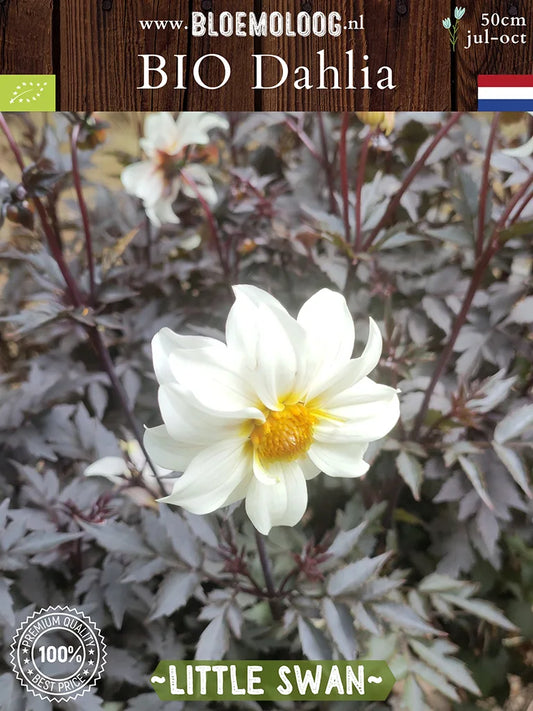
Open flowers for insects
Single dahlias have accessible centres. A lovely choice when you want flowers for bees and other pollinators.
Single-flowered dahliasOrganically grown · NL-BIO-01
From open flowers accessible to bees to full pompons and large dinnerplate blooms: dahlias bring colour from summer until the first frost. Choose flower shape, height and foliage colour for your border, pot or cutting garden.


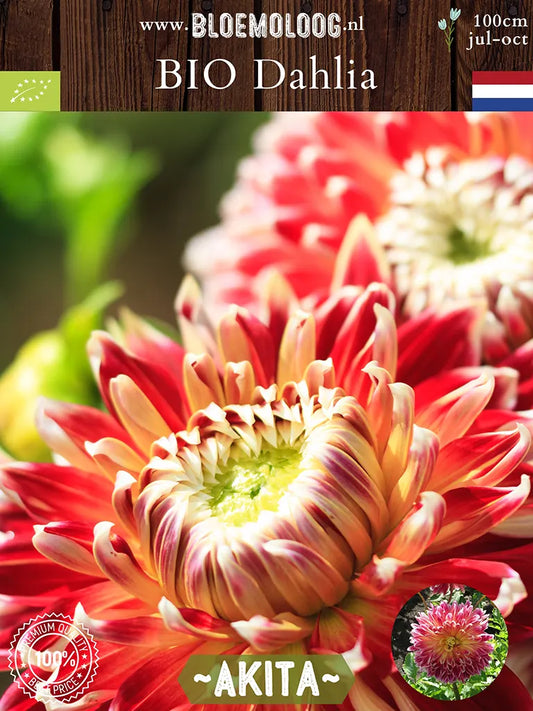




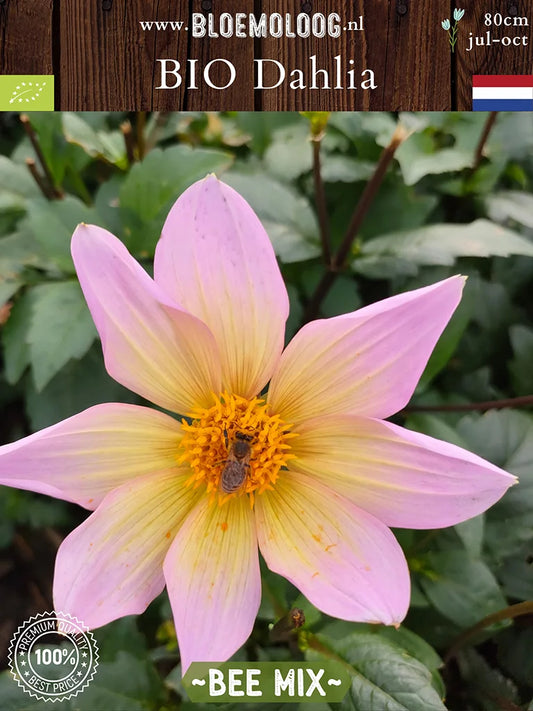





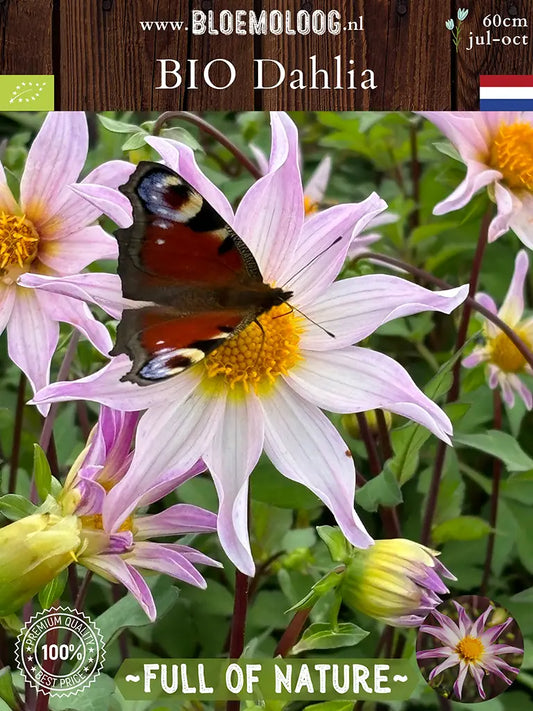


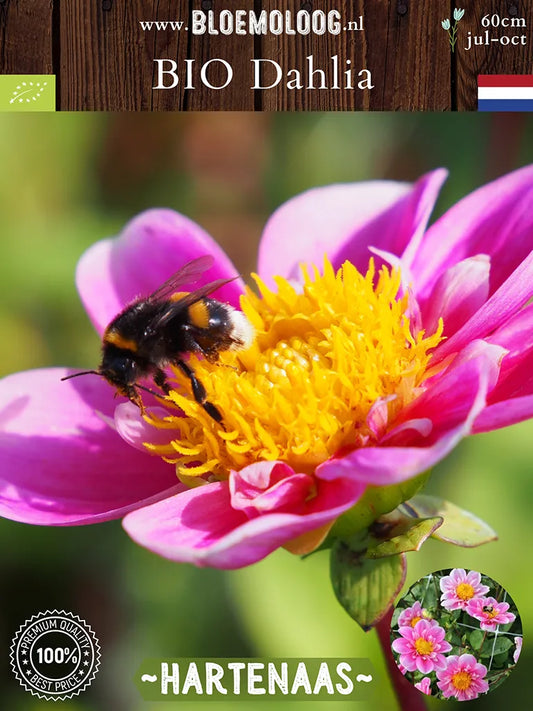







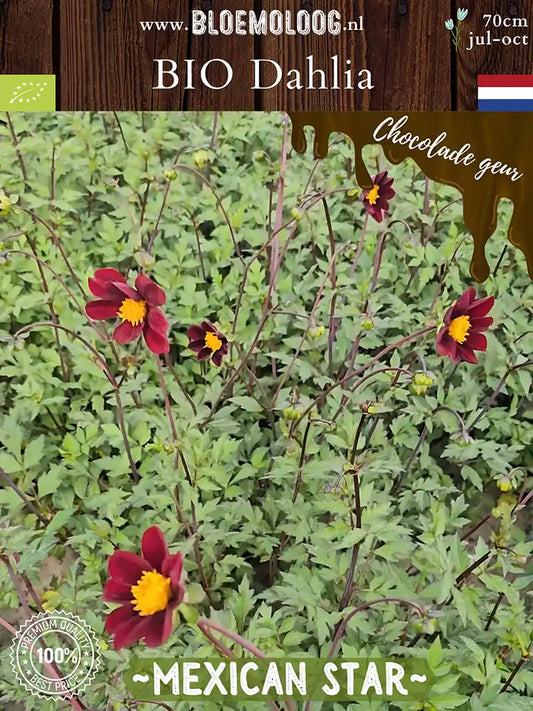

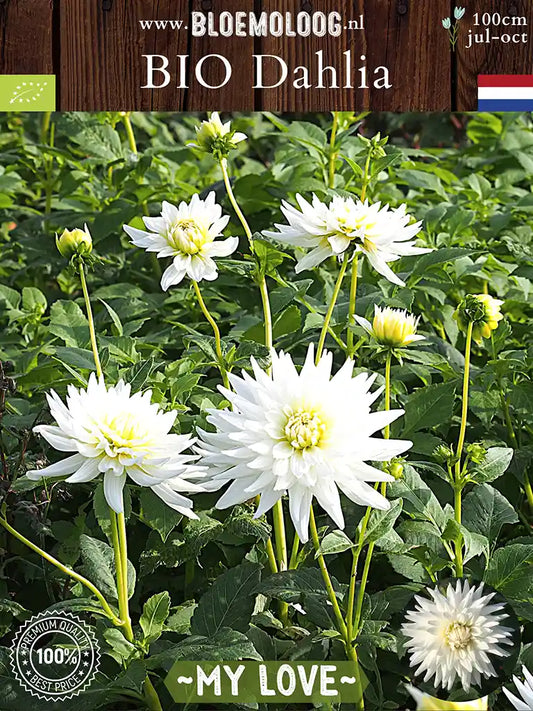
Single dahlias have accessible centres. A lovely choice when you want flowers for bees and other pollinators.
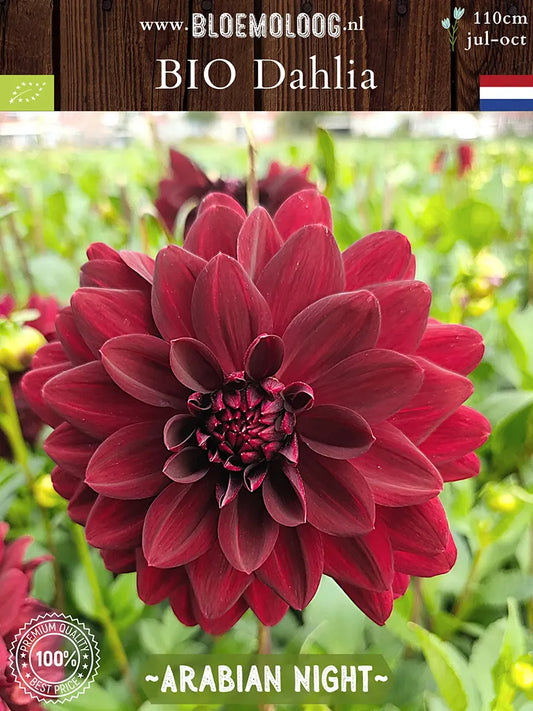
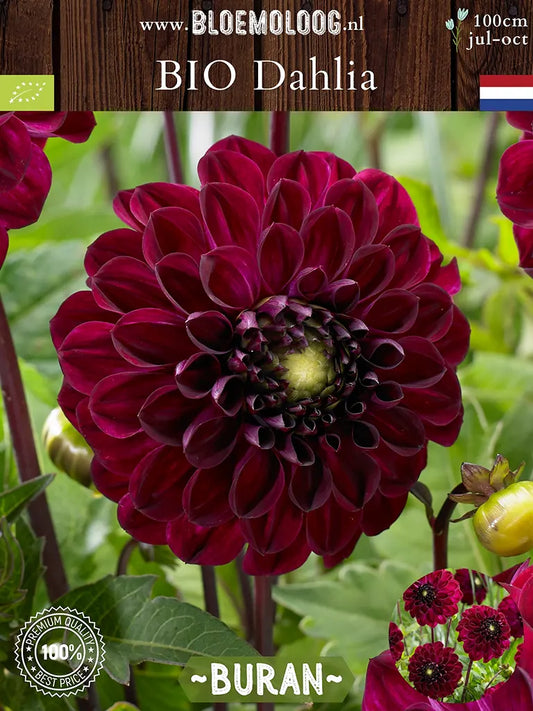
Single-flowered dahliasDark-leaved dahlias provide contrast before the flowers open. Combine their foliage with pale flowers or fresh green plants.
Dark-leaved dahliasFrom round ball and pompon dahlias to large decorative blooms: choose shapes for your bouquets and support tall varieties.
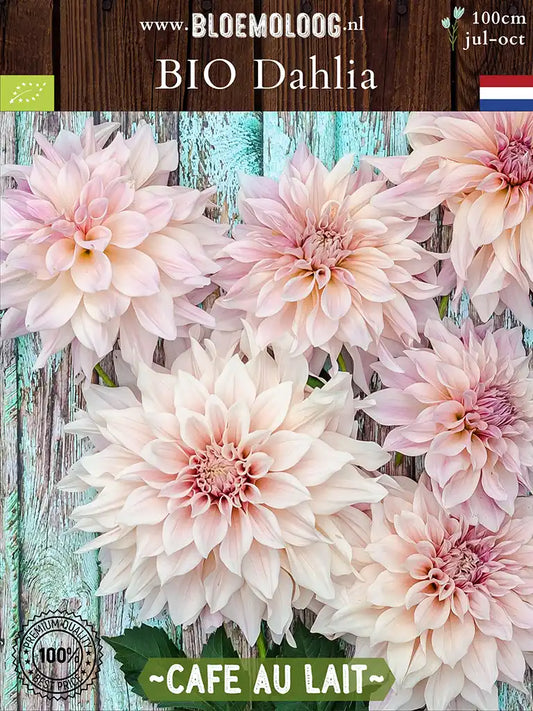
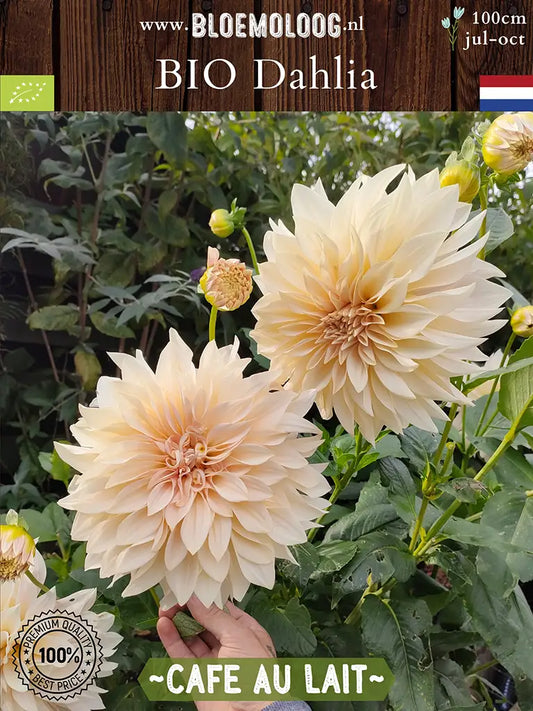
Organic Dahlia 'Cafe au Lait'Dahlias flower for months in many colours and shapes. Bloemoloog offers organic tubers from certified growers. Foliage can be light green, dark green or bronze. Above-ground growth dies with frost; properly overwintered tubers can grow again the following year. The genus Dahlia includes modest open flowers and spectacular large double blooms.
Dahlias grow from swollen roots called root tubers, not bulbs. Growth buds sit on the crown where the tubers join the old stem. This matters when planting and dividing: a detached tuber without crown tissue and a growth bud will not make a new plant.
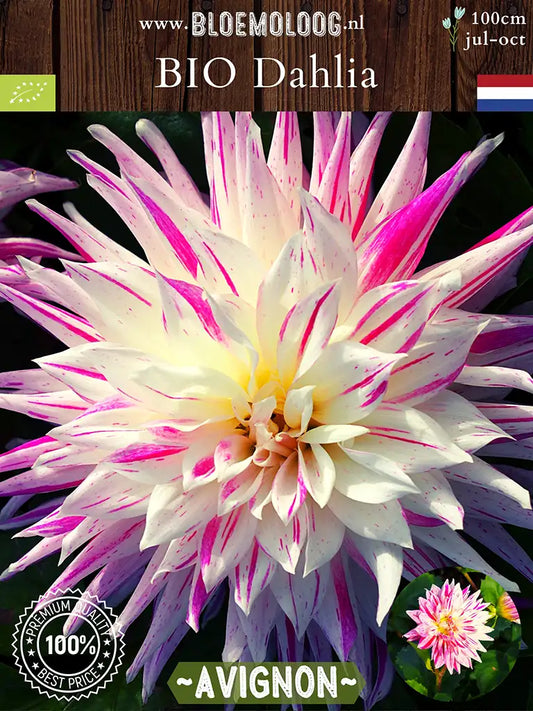
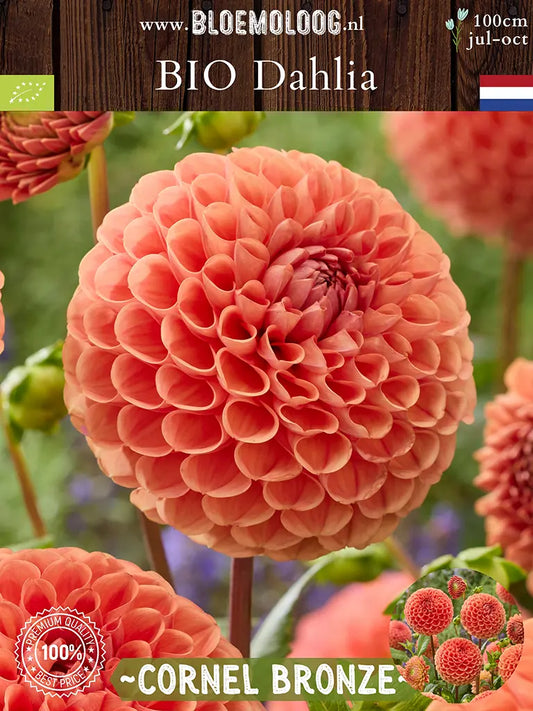
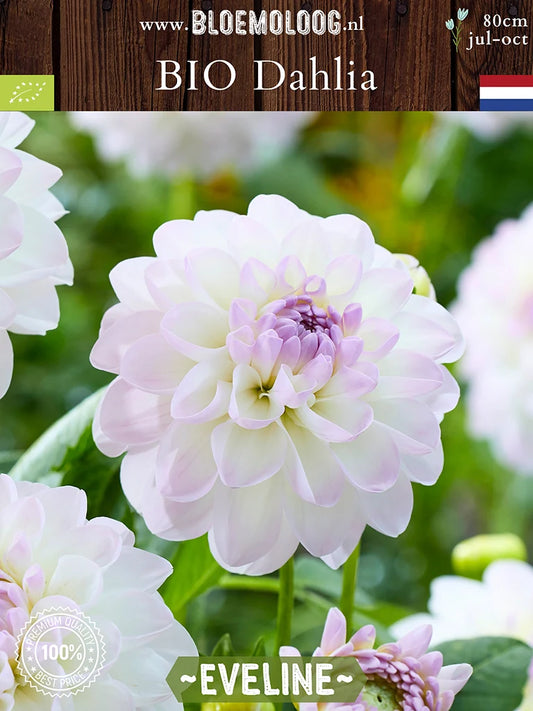
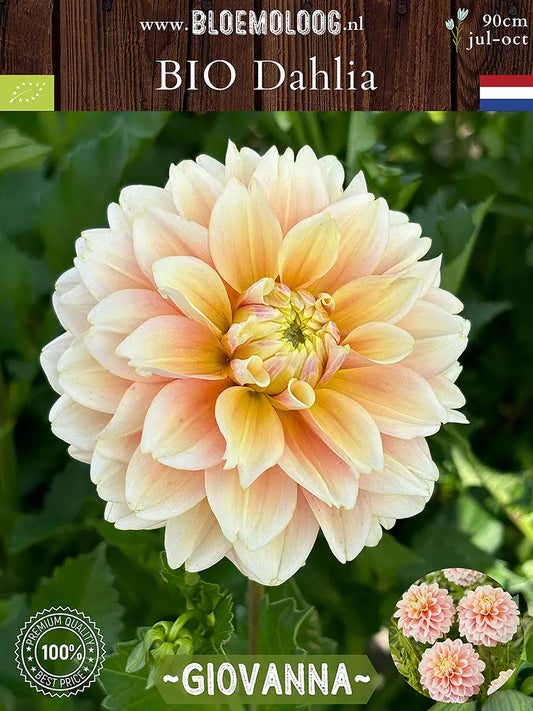
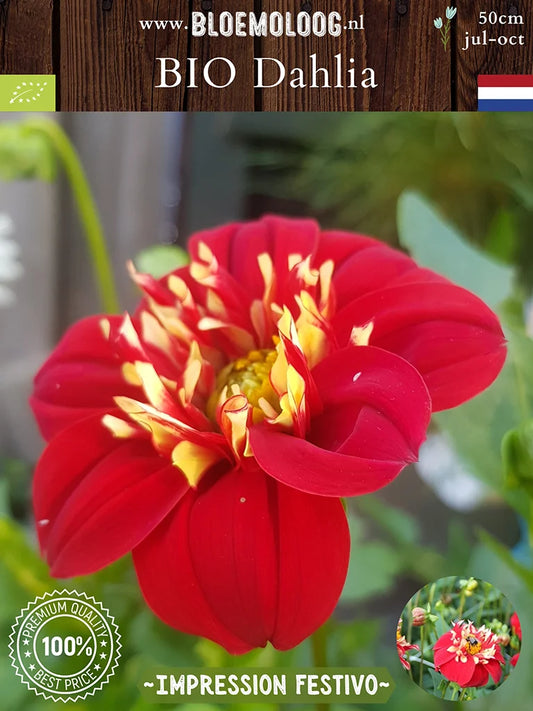
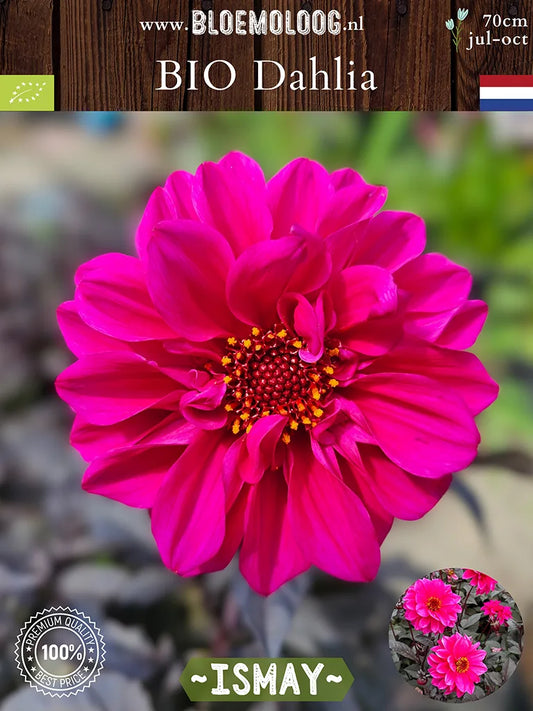
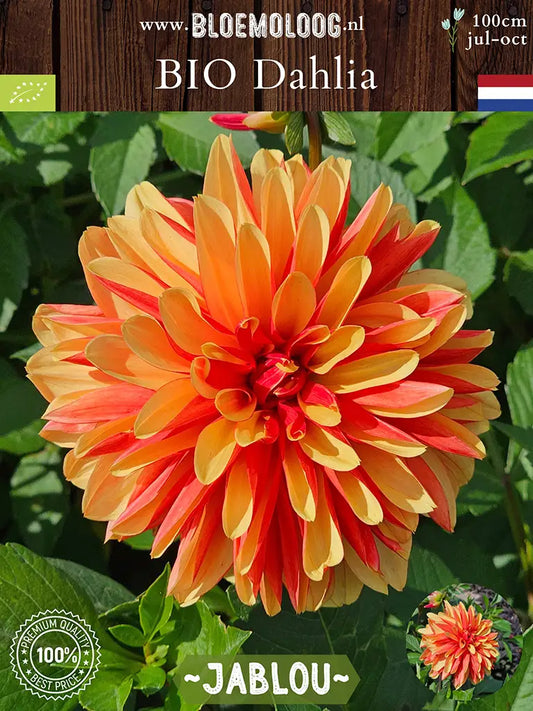
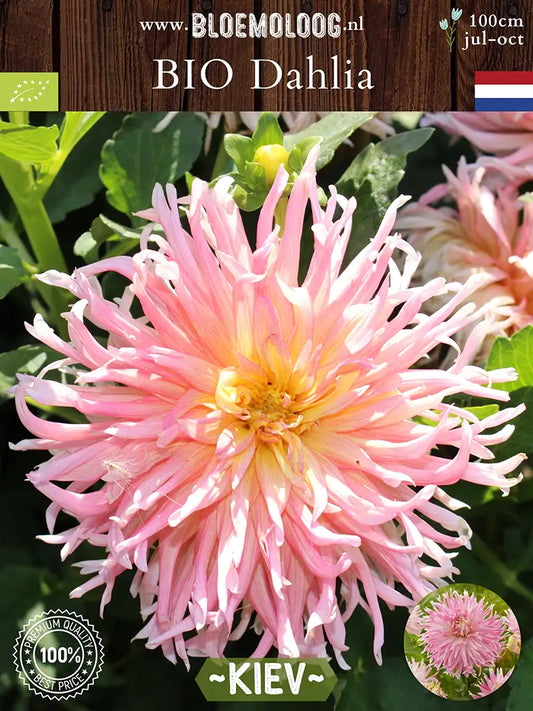
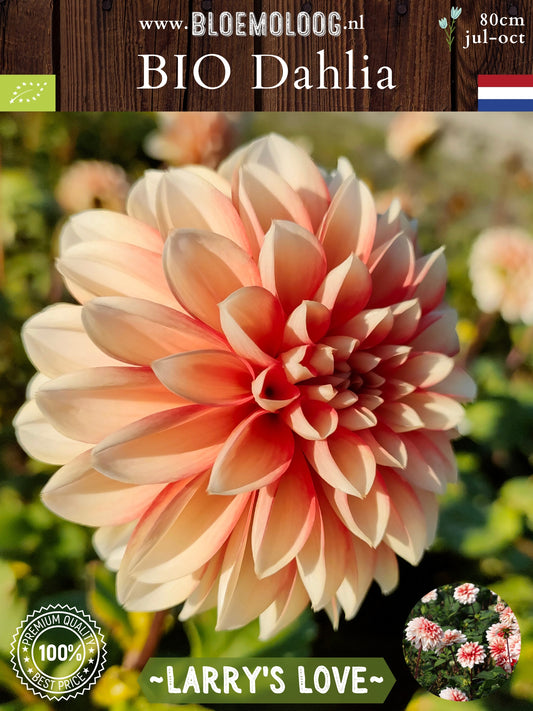
Single dahlias have open centres; collarettes add a collar of small petals. Anemone-flowered varieties such as ‘Totally Tangerine’ have a centre filled with tubular florets. Peony-flowered dahlias have several rows around a visible centre; orchid forms have narrow, often rolled petals creating a star shape. Ball and pompon dahlias are round, pompons being smaller and compact. Decorative dahlias have broad petals; waterlily forms have a shallower, more open appearance. Cactus and semi-cactus forms have pointed, rolled petals, less extensively rolled in semi-cactus varieties. Fimbriated flowers have split tips. ‘Dinnerplate’ describes very large flower size, as in ‘Cafe au Lait’; dark foliage is a leaf characteristic, not a flower shape.
From March, start tubers in pots in a light, frost-free place. Use airy potting compost and water sparingly at first; dormant tubers should not stay wet. Acclimatise plants gradually to outdoor conditions. Plant out only after the risk of night frost has passed, often around mid-May depending on location and weather. Direct planting is also possible when conditions suit, generally until June. Follow product instructions for depth and spacing, with the crown and old stem upwards. Flowering starts according to variety, planting time and growing conditions.
Choose a sunny, sheltered spot with fertile, freely draining soil. Space tall varieties adequately and insert supports at planting to avoid damaging tubers later. Compact varieties often grow well in generous pots with drainage holes. A pot around 40 cm wide is a useful starting point, adjusted to the plant. Pots dry faster than garden soil, so check them regularly in summer.
For bushier plants, remove the growing tip once several well-developed leaf pairs have formed. Use clean scissors, cut just above a leaf pair and leave several pairs below. Side shoots then develop from the leaf joints. Pinching is optional and may delay the first flowers. Do not routinely remove side buds when seeking lots of flowers: disbudding is a different technique for fewer, larger blooms.
Water in dry weather and keep soil evenly moist during active growth without waterlogging. Feed according to soil needs and your organic fertiliser's directions; extra nitrogen is not always beneficial. Remove spent flowers back to a leaf pair to encourage more blooms. Regular picking also encourages flowering. Watch young shoots for slugs and tie tall stems loosely to supports. Open single flowers are generally more accessible to pollinators than densely double blooms.
Foliage often blackens after the first light frost. Lift before severe frost, cut stems back and allow surface moisture to dry. Store cool, frost-free and ventilated, protected from excessive drying. Check periodically for rot and shrivelling. In mild, well-drained gardens, leaving tubers in the ground under thick mulch can sometimes work, but does not guarantee protection from frost or winter wet. Divide healthy clumps in spring when buds become visible. Each division needs a growth bud and an intact connection to a tuber.
Dahlia petals and tubers are also used in cooking. Find inspiration in the article about cooking with dahlia tubers linked below. Organic cultivation alone does not make every plant part suitable to eat; use reliable information about the plant and preparation.
Dahlia tubers are generally available from January to June, while stocks last. Deliveries for the planting season start from March; always follow the product's current information. Find us at markets and events in spring too. Explore single-flowered and dark-leaved dahlias and other summer flowers below.
After the last frost. Gradually acclimatise plants started indoors to outdoor conditions.
They are frost-sensitive. Lift where necessary and store frost-free; persistently wet soil is unsuitable.
Check sunlight, moisture and nutrition. Deadhead repeat-flowering varieties to support further blooms.