


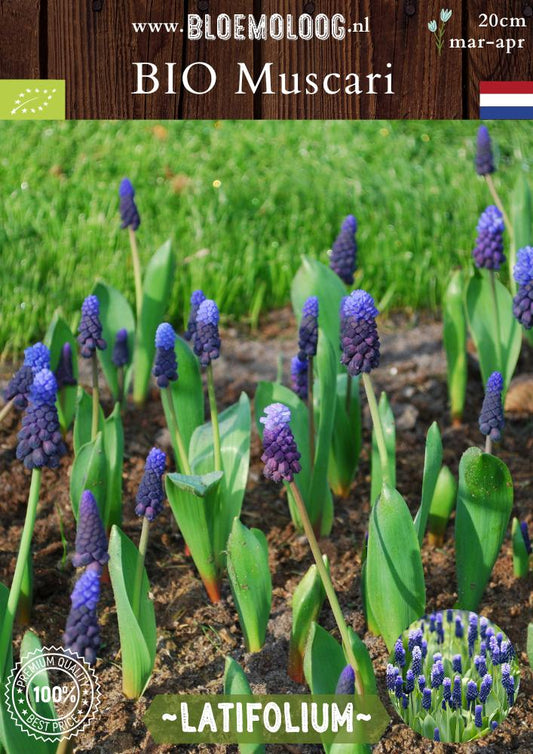

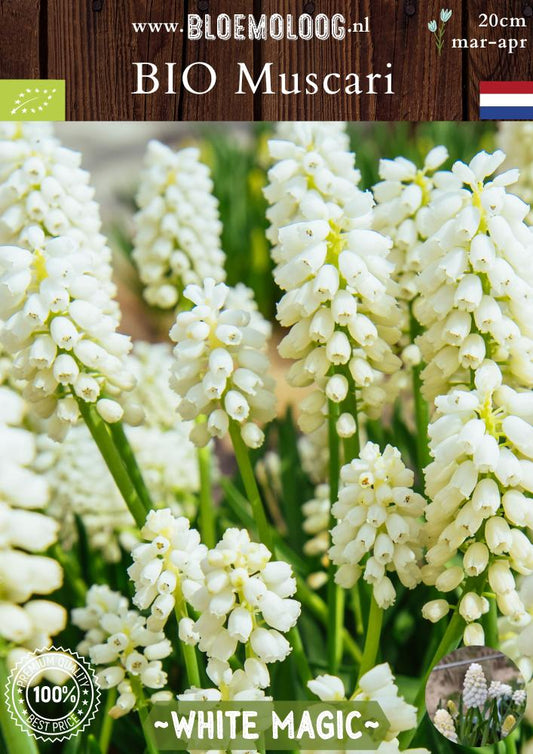


Organic blue and white grape hyacinths
Grape hyacinths, Muscari, are perennial bulbs with small bell-shaped flowers in compact clusters. They take little space and look lovely in repeated groups beside a path or at the front of borders. Heights and flowering times vary by species; check each product rather than expecting every variety to behave alike.
Which muscari suit your garden?
Muscari armeniacum produces the familiar blue clusters. Muscari ‘White Magic’ gives a lighter white accent. Muscari latifolium has broader leaves and striking two-tone flowers. Compare colours, heights and flowering months on the product pages. Our seasonal range varies.
Combining with daffodils, tulips and bee flowers
Blue grape hyacinths contrast with yellow daffodils, while white varieties bring calm among colourful tulips. Repeat groups rather than scattering single bulbs everywhere. Choose overlapping flowering periods for simultaneous blooms. Accessible flowers of many muscari provide nectar for bees; their value varies with flower form and weather.
When and where to plant
Plant in autumn in unfrozen soil. Choose sun or light shade and good drainage. Under deciduous trees, sufficient light must reach the plants during growth; deep evergreen shade reduces flowering. Plant pointed ends upwards at the product’s recommended depth and spacing. Avoid both prolonged wet conditions and severe drying during growth.
Pots and grass
Pots with drainage holes help keep a group in one place. Combine with other spring flowers and water during dry growing periods. In grass, choose a spot that can remain unmown after flowering, away from heavy foot traffic. In borders, grape hyacinths fit between later-emerging perennials.
After flowering and mowing
Let foliage yellow and die naturally before removing it or mowing. Do not cut green leaves just to tidy the border. Some grape hyacinths produce new leaves in autumn; leave these too. Water pots during dry spells. Match any organic feeding to the soil and product advice: more feed is not automatically better.
Naturalising or limiting spread?
In suitable conditions, grape hyacinths spread through offsets and sometimes seed. This creates a natural carpet but can crowd small delicate plants. Remove spent clusters before seeds ripen to limit self-seeding; this does not stop offsets forming. Divide crowded groups during dormancy and replant the bulbs you want to keep. Pots make spread easier to manage.
Ordering organic muscari
Our grape hyacinths come from certified organic growers. Orders are generally available from June to January while stocks last, with spring bulbs delivered from mid-September. In-stock items dispatch within 1–3 working days unless the product states otherwise. Check our market calendar for loose bulbs from the crates, and follow the current product information when ordering.
Frequently asked questions
How can I limit grape hyacinth spread?
Remove seed heads before ripening and divide crowded groups. Offsets can still form.
Are autumn leaves normal?
For some muscari, yes. Keep these green leaves; they help the bulb grow.
Can grape hyacinths grow in pots?
Yes. Provide drainage holes, avoid standing water and check for drying during growth.