Bloemoloog
Estimated Shipping Widget will be displayed here!
Couldn't load pickup availability
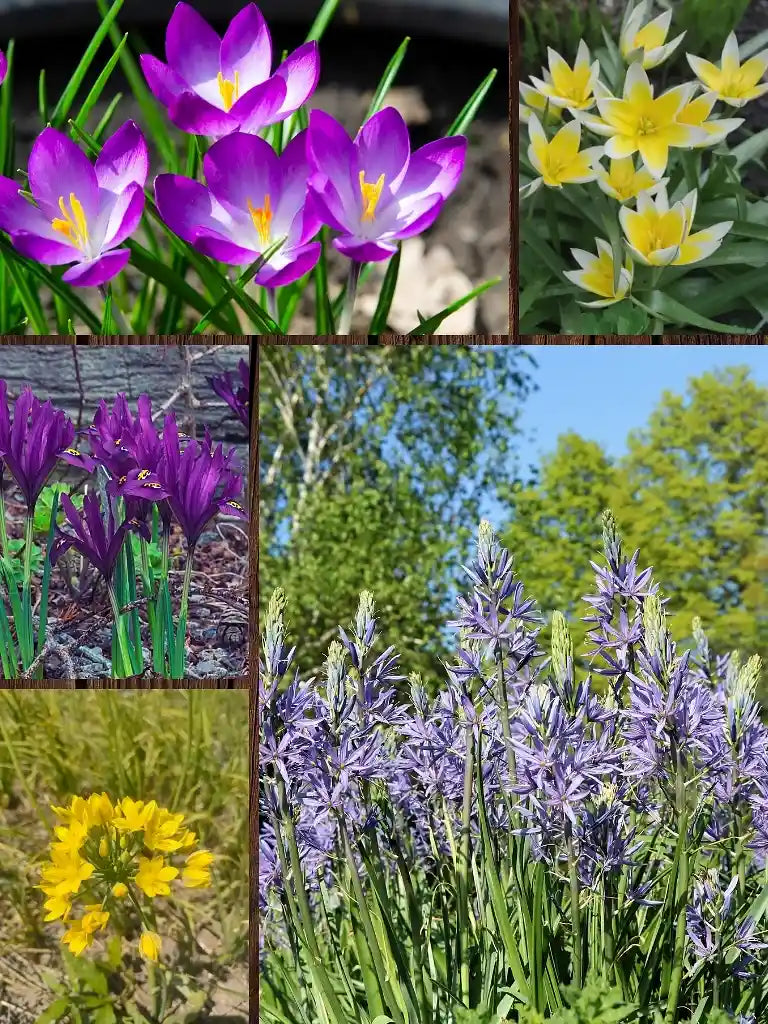
Organic naturalizing bulb mix for natural flowering, year after year
This organic naturalizing bulb mix contains five carefully selected varieties that return year after year and slowly expand. Ideal for natural gardens, borders, tree pits, or naturalizing meadows. All flower bulbs are certified organic and suitable for bee-friendly gardens.
What's in this mix?
- 10 Organic Crocus tommasinianus 'Ruby Giant' - 10cm, Feb-Mar | Early-flowering purple crocus, very attractive to bees.
- 10 Organic Iris reticulata 'JS Dijt' - 15cm, Feb-Mar | striking purple dwarf iris with early flowering.
- 10 Organic Tulipa tarda - 15cm, Mar-Apr | Low-growing botanical tulip with star-shaped yellow/white flowers.
- 3 Organic Camassia leichtlinii 'Caerulea' - 70cm, May-Jun | Blue flowering prairie flower, suitable for moist soil.
- 10 Organic Allium moly 'Jeannine' - 30cm, May-Jun | yellow flowering ornamental onion that spreads well.
Location and soil
This mix grows best in well-drained, slightly nutrient-rich soil . All varieties thrive in sun or light partial shade. Camassia and Allium moly also tolerate slightly wetter conditions.
Planting time and flowering time
Plant the bulbs from September to December, about two to three times as deep as the bulb's height . The first varieties (Crocus, Iris) will bloom as early as February/March, followed by tulips and wild Camassia, with Allium as a late bloomer in May/June. This way, you'll enjoy a long flowering period in spring.
Care and naturalization
After flowering, allow the foliage to die back completely to store energy. Prune only when the leaves have turned yellow. Feed with a handful of organic bulb food at planting time and in the fall to encourage strong growth. All varieties are winter-hardy and suitable for naturalizing .
Benefits of organic naturalizing bulbs
- 100% organically grown - without chemicals
- Bee-friendly and safe for soil life
- Long flowering effect due to variation in species
- More flowers every year thanks to naturalization
Frequently asked questions about naturalizing bulbs
Do they come back every year?
Yes, all the species in this mix are perennial and naturalize well. They return every year and can reproduce.
Are the bulbs suitable for pots?
Crocuses and irises thrive in pots. Tulipa tarda also works well, but Camassia and Allium prefer open ground.
Can I also plant this mix in grass or a lawn?
Yes, crocuses, tulips tarda, and camassias thrive in grass. Mow only when the foliage has completely died back, so they can store enough energy for the next season.
Do the flowers have a scent?
Yes, some species such as Tulipa tarda and Allium moly emit a subtle scent that also attracts insects.
Are all the species in this mix bee-friendly?
Yes! All the varieties in this mix attract pollinators like bees, bumblebees, and butterflies. So they're perfect for a natural and wildlife-friendly garden.
Organic naturalizing bulb mix ordering information
✅ Skal certified: 109459
📦 Packed per 50 flower bulbs - Value pack
🛒 Pre-sale - Delivery mid-September!
📬 EU Shipping €8.95 - Free shipping on orders over €100.
Properties
| Flowering period: | February - June |
| Planting time: | From October |
| Planting depth: | See info above |
| Planting distance: | See info above |
| Height: | 10 - 40 cm high |
| Flower diameter: | Miscellaneous |
| Location: | Part shade, sun |
| Soil pH: | Clay, sandy soil - Neutral |
| Winter hardiness: | Good winter hardiness |
| Propagation: | Good |
| Bee-friendly: | Yes |
View more naturalizing bulbs

NL-BIO-01