


Organic hyacinths and their relatives
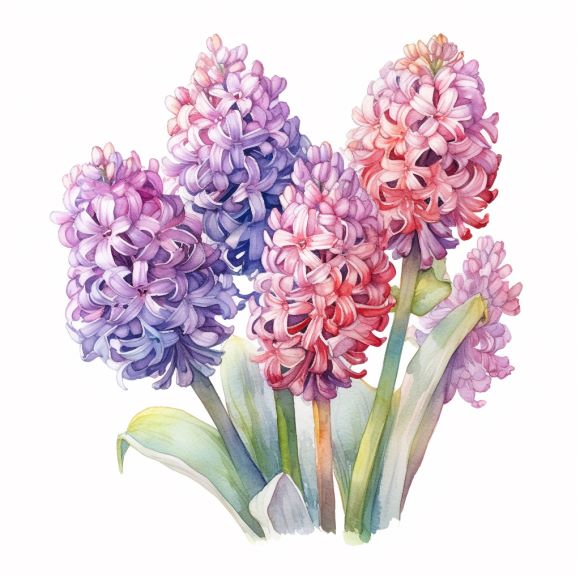
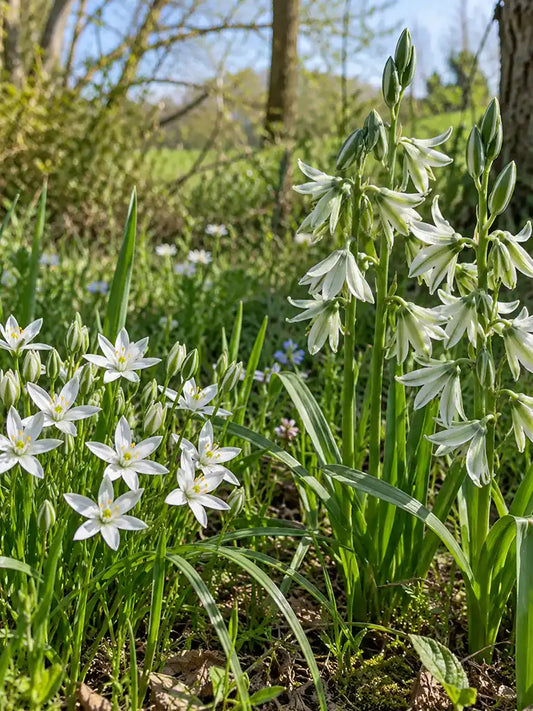
The familiar fragrant hyacinth is Hyacinthus orientalis, with a dense cluster of scented flowers. This broad collection also includes bluebells, grape hyacinths, squills and star-of-Bethlehem. These belong to different genera with their own needs. The advice below mainly concerns Hyacinthus; always consult the individual information for other plants.
Choosing colour, scent and size
For classic fragrant hyacinths, choose ‘Blue Pearl’, ‘Pink Pearl’, ‘White Pearl’ or colour combinations. Plant near a path or seat to enjoy the scent. For smaller clusters, consider grape hyacinths, Muscari. Bluebells, Hyacinthoides, give a looser woodland effect. Compare heights and flowering months on the product pages.
Indoor flowers: prepared bulbs or garden bulbs?
Early indoor flowering uses specially prepared hyacinth bulbs. Do not assume all garden bulbs have received this treatment; check the description. Ordinary bulbs need time for chilling and rooting. A fixed fridge period or planting date does not guarantee Christmas flowers. Follow the schedule for the bulb type, then gradually increase light and warmth after the cool phase, away from radiators.
Outdoor planting and position
Plant ordinary garden bulbs in autumn in soil that is neither frozen nor waterlogged. Hyacinthus prefers sun and good drainage; flowering may be less plentiful in light partial shade. Follow the product’s depth and spacing, pointed end upwards. Smaller plants in this collection may need a different position or depth.
Pots and borders
Outdoor pots need drainage holes and no standing water. Keep the soil slightly moist during growth and flowering without saturating the bulbs. Protect pots from hard frost and prolonged winter wet. Repeat groups among later-emerging perennials in borders. In mixed pots, choose conditions suitable for every species.
After flowering
Remove the faded flower cluster if desired, keeping green leaves until they yellow and die naturally. Water during dry growing periods and match organic feeding to the soil and product advice. Bulbs can stay in suitable garden conditions. Later flower clusters are often looser than in the first year; annual lifting is not usually necessary.
Propagation and handling
Hyacinths can form offsets. Separate these gently from healthy bulbs during dormancy and replant; full flowering usually takes several years. Avoid disturbing growing bulbs. Wear gloves if your skin is sensitive, as hyacinth bulbs can irritate it. These ornamental bulbs must not be eaten.
Ordering organic hyacinths
Our bulbs come from certified organic growers. Orders are generally available from June to January while stocks last, with spring bulbs delivered from mid-September. In-stock items dispatch within 1–3 working days unless stated otherwise. Check the product for bulb type and delivery dates, and our market calendar for loose bulbs from the crates.
Frequently asked questions
Can every hyacinth flower indoors at Christmas?
No. Early indoor flowers require suitable bulbs and an appropriate chilling and rooting schedule.
Must I lift hyacinths every year?
Not usually. They can remain in suitable conditions; later flower clusters are often looser.
Does one planting rule cover this collection?
No. Fragrant hyacinths, bluebells, grape hyacinths and other genera have different needs.