
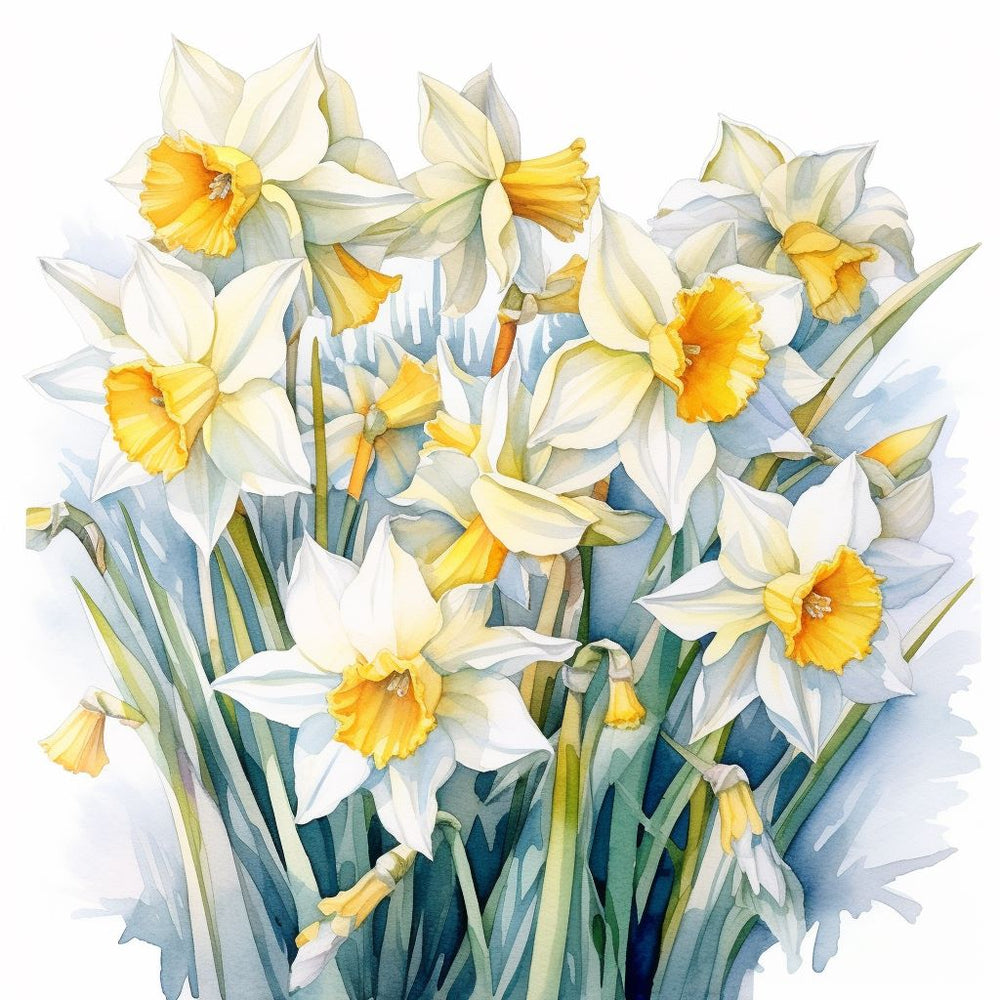


Organic daffodils for spring
Daffodils, Narcissus, are perennial bulbs with a distinctive trumpet or cup. Alongside yellow flowers, there are white, bicoloured and double varieties. In a suitable position, the bulbs can stay in the ground for years. Combine early and late varieties; flowering dates also depend on the weather.
Which daffodils suit your garden?
Compact varieties such as ‘Tête à Tête’ and ‘Jetfire’ suit pots and the front of borders. ‘Thalia’ creates a lighter, white display. For double flowers, consider ‘Bridal Crown’ or ‘Replete’. Compare the heights and flowering months on the product pages: daffodils do not all flower together.
Fragrant daffodils
For fragrance, consider Narcissus jonquilla ‘New Baby’ or Narcissus poeticus ‘Recurvus’. Plant a group near a seat or path to enjoy the flowers close up. Scent varies between varieties, and temperature and wind affect how noticeable it is outdoors.
When and where to plant
Plant in autumn, preferably early in the planting season, while the soil is neither frozen nor waterlogged. Choose sun or light shade and well-drained soil. Under deciduous trees, provide enough light and moisture during growth. Follow the product instructions for depth and spacing, planting the pointed end upwards.
Pots, borders and grass
Use pots with drainage holes and avoid standing water. In borders, later-emerging perennials can partly hide the fading foliage. For naturalising in grass, choose an area you can leave unmown in spring. How quickly a group spreads depends on the variety and conditions.
After flowering and mowing
Let the leaves yellow and die back naturally; do not cut or tie green foliage. Mow only once it has died back, usually at least six weeks after flowering. Water during dry growing periods, especially in pots. Faded flowers can be removed. Congested groups that flower less can be divided and replanted during dormancy.
Daffodils as cut flowers
Daffodils look lovely in their own vase. Sap from cut stems can affect other cut flowers. Use a clean vase and fresh water. Daffodils are ornamental plants and must not be eaten. Keep the bulbs away from children and pets, and wear gloves if the sap irritates your skin.
Ordering organic daffodils
Our daffodils are organically grown by certified growers. Orders are generally available from June to January while stocks last, with spring bulbs delivered from mid-September. In-stock items dispatch within 1–3 working days unless the product states otherwise. Check current product availability and our market calendar for bulbs sold loose from the crates.
Frequently asked questions
Do daffodils return each year?
In suitable conditions they can return for years. Let the leaves die back completely after flowering.
When can I mow daffodils in grass?
Only once the foliage has died back, usually at least six weeks after flowering.
Can daffodils grow under trees?
Under deciduous trees, provided enough light and moisture are available during growth.