
Collection: Organic snowdrops
Organically Grown Snowdrops
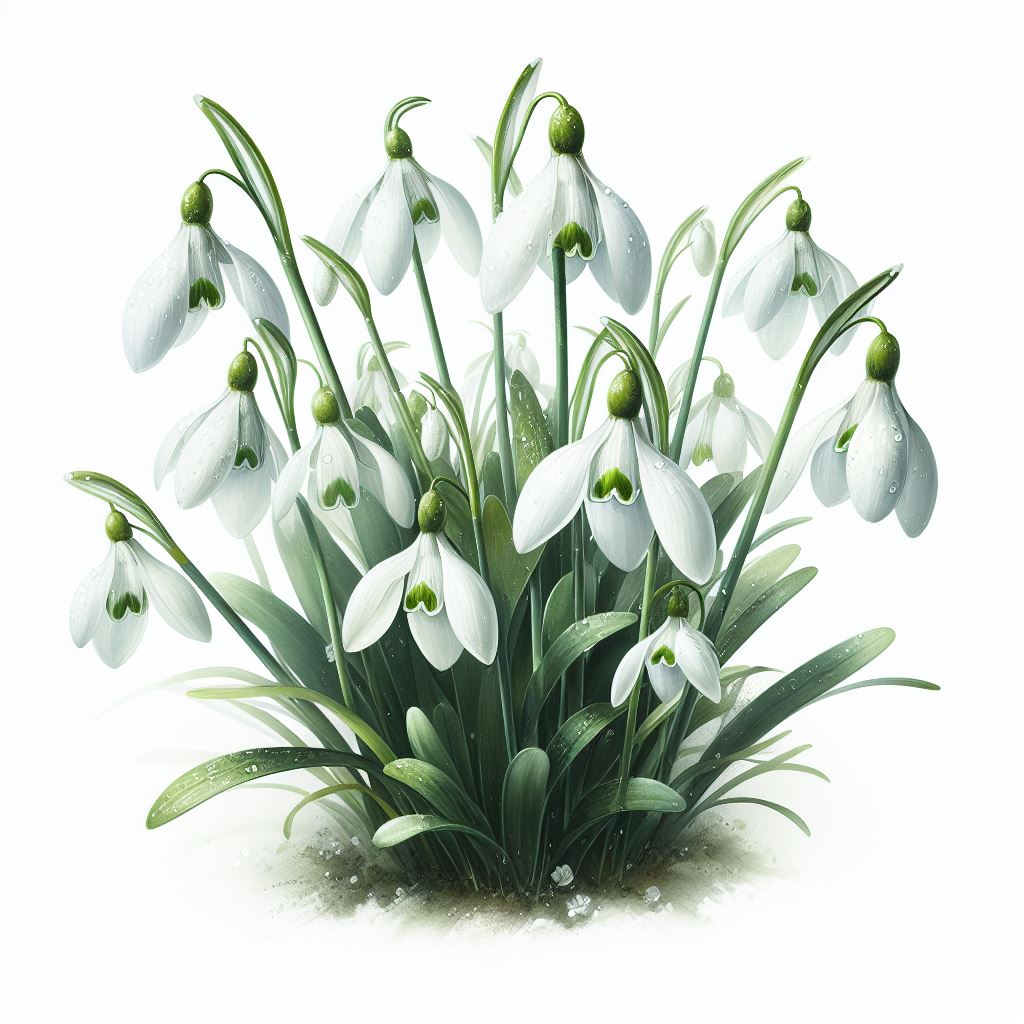
The snowdrop, scientifically known as Galanthus, is one of the first flowers to bloom in spring and is often seen as a symbol of the season's arrival. They grow no taller than 20 centimeters and typically have narrow, elongated leaves. The small, nodding flowers consist of six white petals, with the three shorter ones featuring a green marking. The petals form a bell-like shape around the central parts of the flower, and as the sun rises, the shimmering bloom opens wide to catch the light—creating a more open and spread-out flower form.
How and when to plant snowdrops?
The best time to plant snowdrops is from summer until November. Plant them at a depth of 2 to 3 times the height of the bulb and space them 2 to 3 times the width apart. Place the bulbs point-up, cover with soil, and press gently to anchor them. Water well after planting so the soil stays moist and promotes root development for early spring flowering.
Where to plant snowdrops
Snowdrops prefer a spot in partial to full shade, though they tolerate some sun. Plant them in groups beneath deciduous trees or shrubs, or in grassy areas around trees—preferably where there is little foot traffic and the trees provide summer shade.
Ensure the soil is well-drained—ideally moist but not soggy. They grow well in loamy soil, which retains moisture while offering adequate drainage. Sandy soils also work if kept moist, offering excellent drainage that helps prevent bulb rot.
Snowdrops in clay soil
While snowdrops tolerate some clay, heavy clay may block proper drainage. Improving soil structure with organic matter such as compost or well-rotted manure can enhance drainage and support healthy growth.
Caring for snowdrops
Snowdrops naturalize easily and require little care. A layer of mulch—like leaves or compost—can help retain moisture and suppress weeds. Apply a thin layer around the base of the plants but avoid covering the bulbs directly.
Propagating snowdrops
Snowdrops usually propagate naturally via bulb division and seed. If you'd like to grow more, dig them up after flowering and gently divide the bulbs. Replant immediately at the desired location.
Origin of the snowdrop
The common snowdrop is a stinzenplant and native to much of Europe, including the western, central, and southern regions. The name Galanthus derives from the Greek words ‘gala’ meaning ‘milk’ and ‘anthos’ meaning ‘flower’, referring to the white color of the blooms.
Buying organic snowdrops
The Galanthus ikariae, also known as the Ikaria snowdrop, and the broad-leaved Galanthus elwesii 'Polar Bear' with its outward-facing flowers are organically grown and available now in the Bloemoloog collection. We hope that the Galanthus nivalis will be available again next year.
When to buy snowdrops?
From June to January—or while supplies last—you can order snowdrop bulbs from the Bloemoloog. They are freshly harvested weekly in summer, so you’re guaranteed top-quality bulbs delivered to your door.
Buying snowdrops at the market
This product is not available at the market due to poor storage conditions in outdoor temperatures. If you’d like to pick them up at a market, please contact us or mention it in the order comments.
-
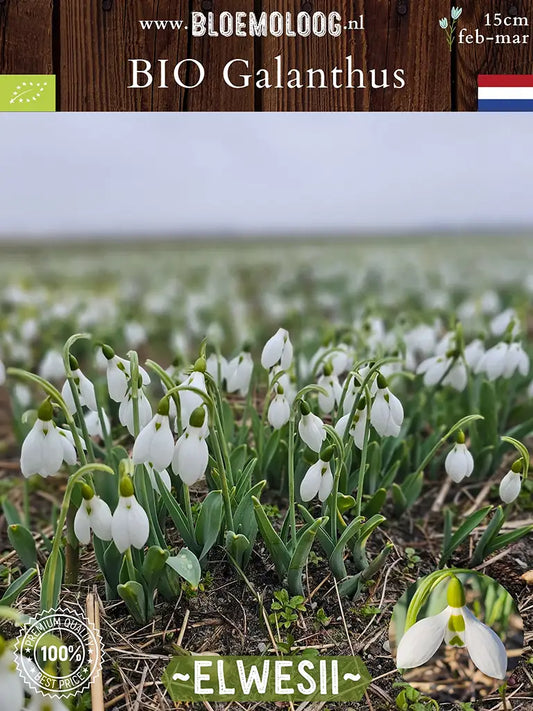
Organic Galanthus elwesii - Giant Snowdrop | 10 pcs.
Regular price €8,34Regular priceUnit price €0,83 each

-
Organic spring bulbs
Spring-flowering bulbs and tubers are popular plants that produce beautiful flowers from early spring through summer. Because of their early bloom, they combine well with perennials when they still need to establish themselves.
Tulips are probably the most well-known spring flowers. They come in many different colors, shapes, and sizes. Daffodils are known for their cheerful yellow flowers, but they also come in other colors like white and orange. Crocuses are small bulbous plants with striking flowers in shades of purple, yellow, and white. They are often the first flowers to appear in spring. Hyacinths have fragrant flowers in various colors, such as pink, purple, blue, and white. They are often planted in borders, flower beds, or pots.Benefits of organic spring bulbs
When you choose organic flower bulbs that bloom in spring, you can be sure that no chemicals or pesticides will end up in your garden. These pesticides are harmful to bees and prevent them from finding their nests. As a result, more and more bee species have been added to the red list in recent years. Together, we can do something about this!
Flower bulbs for wild bees
Did you know that wild bees lay eggs in their nests, which then hatch in early spring? These newborn insect helpers immediately search for food in the surrounding area. There are also insects that have hibernated and are desperately looking for a hearty breakfast: the blooming flowers where nectar and pollen can be found! Just after winter, there's little greenery or food for these insects. Planting early-blooming flower bulbs ensures there's food available, and the insects can gain strength for the coming summer.
Organic growers
The organic growers we work with cultivate not only the most beautiful but also the strongest products. They cultivate varieties and species of flowers and plants that experience has shown to be virus-resistant, so they don't need to use chemicals and pesticides. Organic growers seek natural remedies and solutions against diseases and/or pests. All our flower bulbs are certified organic; both the Florist and the growers are SKAL-certified.
When do you plant spring bulbs?
Spring-flowering bulbs can be planted from autumn until January. Bulbs that need to be dug up in the summer after flowering should be dug up starting in late July and stored until the next planting season in autumn.
What to do after flowering
When spring bloomers have finished blooming, cut off the wilted flowers at the top of the stem. Let the rest of the plant die back naturally so it can still receive maximum energy from the sun.
How do you store spring bulbs?
If you've purchased flower bulbs from us and had them delivered to your home and would like to leave them for a while, we recommend opening the box and storing it in a ventilated, cool place until you're ready to plant them.
Store flower bulbs you dig up after flowering in a warm place, such as a shed. To prevent mice from eating the bulbs during this period, you can also hang them in a bag or pantyhose. -
Where is the best place to plant spring bulbs?
Spring-flowering bulbs are flowers that bloom in the spring, between January and July. There are many different types of spring-flowering bulbs, suitable for different types of gardens and soil. For example, some bulb plants enjoy catching a glimpse of the sun during flowering, but prefer to be covered by a tree during their dormant period in summer.
Spring bloomers in the sun
Many spring bloomers need plenty of sun to bloom and grow well for the following year. These flowers thrive in full sun:
Spring bloomers in the shade
Some spring bloomers also grow and bloom well in the shade, such as:
Spring bloomers in moist soil types
There are also flower bulbs that can be planted in moist soil. Some varieties from the Florist's collection include:
Conclusion
There are many different types of spring bloomers suitable for different types of gardens and soil. Whether a spring bloomer can grow in sun or shade depends on the specific variety. Some prefer dry soil, while others prefer wet feet. So, there's a suitable spring bloomer for every garden.
Tips for a flowery garden
Plant a variety of flowers, each with its own blooming time, so there are flowers blooming throughout the spring and food for bees and other insects in your garden. Would you also like to arrange your garden/bed so you can enjoy flowers all spring long, and the bees too? Feel free to send us a message or ask us at the market stall. We're happy to help! Promote biodiversity in your garden and enjoy the first flowers and colors after the cold and dark winter!
Order spring bloomers in advance
Pre-sales for spring-flowering bulbs will begin on June 1st in the Bloemoloog webshop.
During the pre-sale, you can pre-order your desired products. This way, you can be sure your favorite flowers are still in stock, and we'll ship your package with PostNL as soon as planting time arrives.
Flower bulbs ordered in the pre-sale will be delivered in mid-September. From then on, they can be planted directly in the garden or in containers on the balcony.