Bloemoloog
Estimated Shipping Widget will be displayed here!
Couldn't load pickup availability
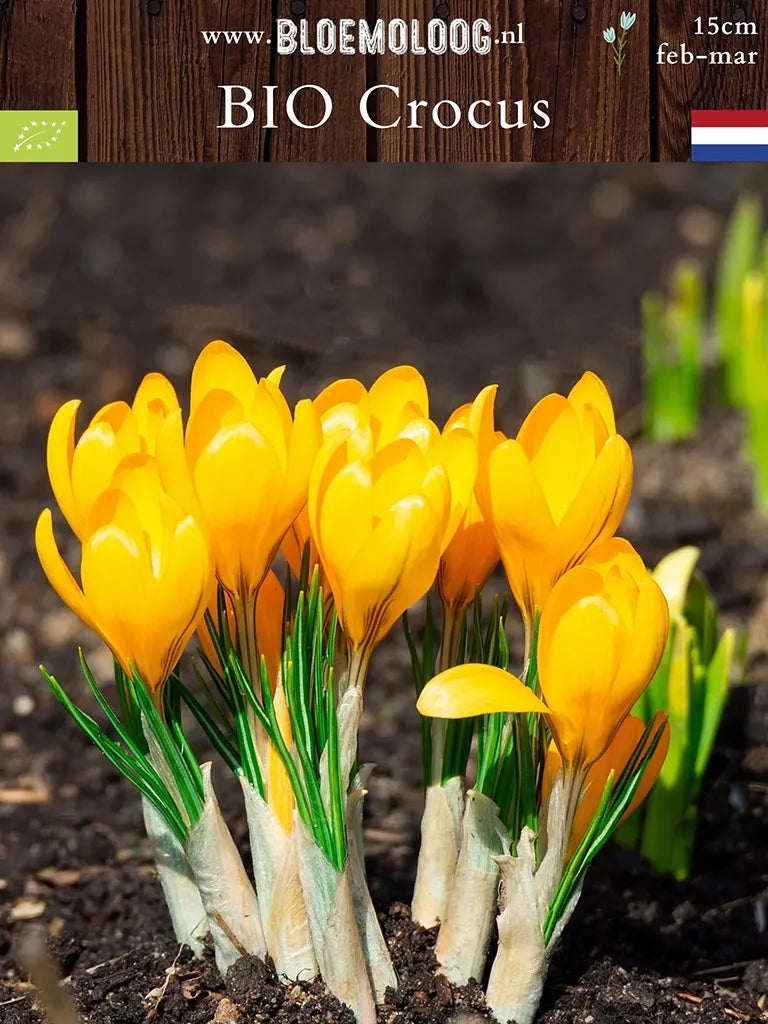
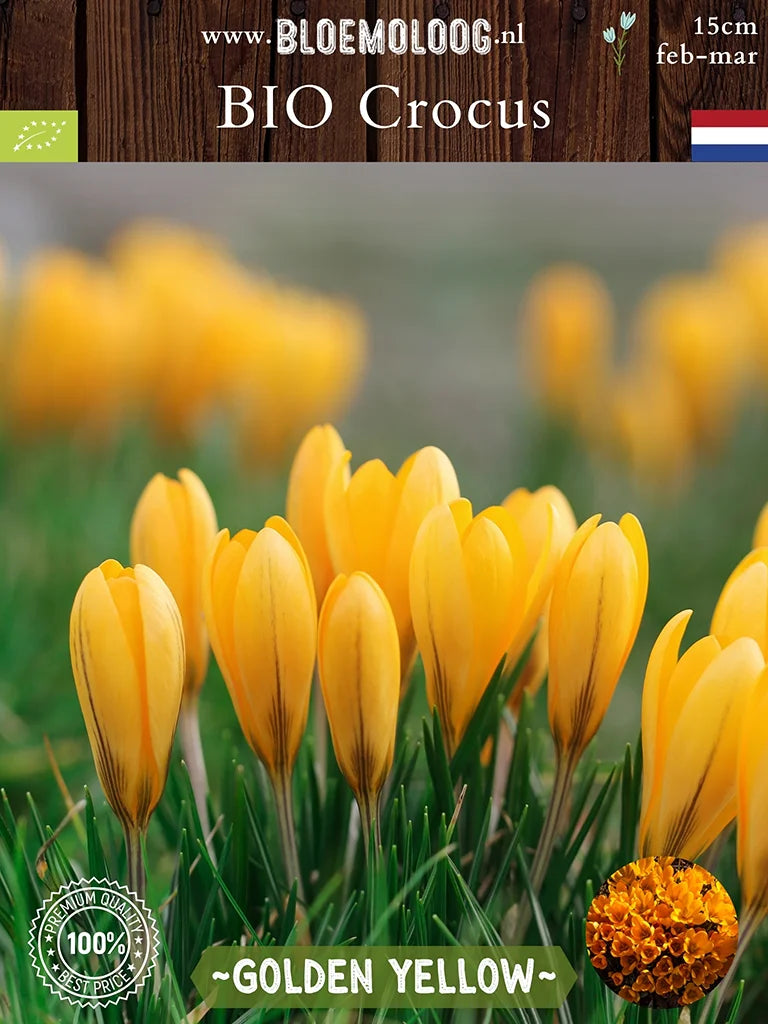
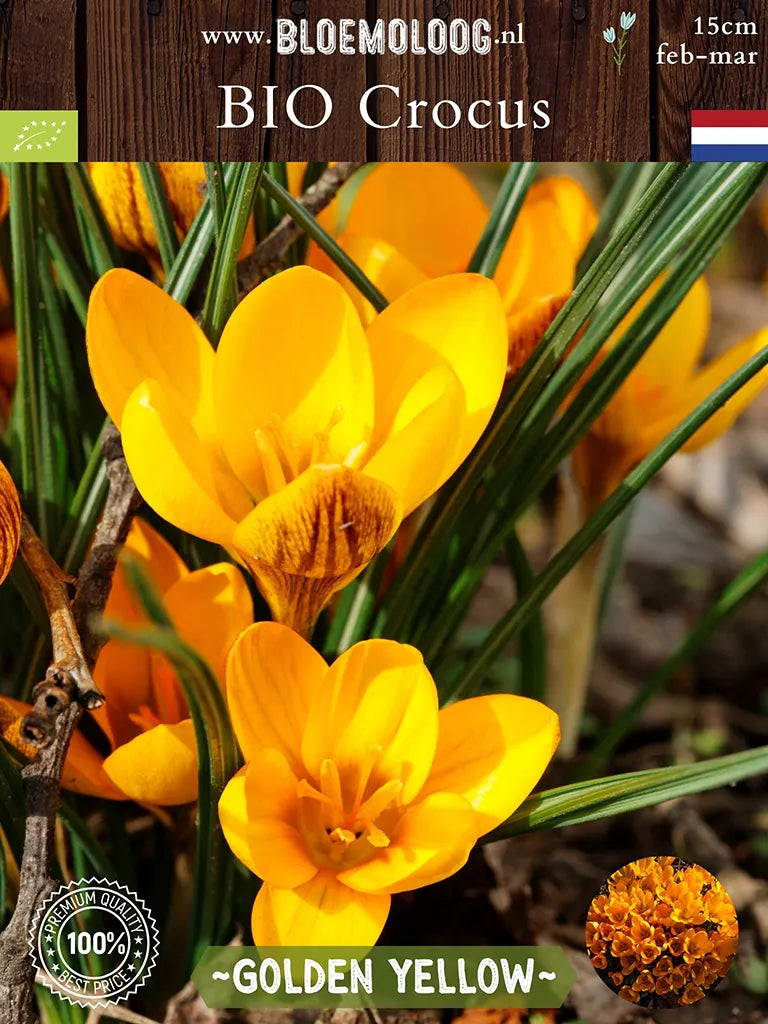
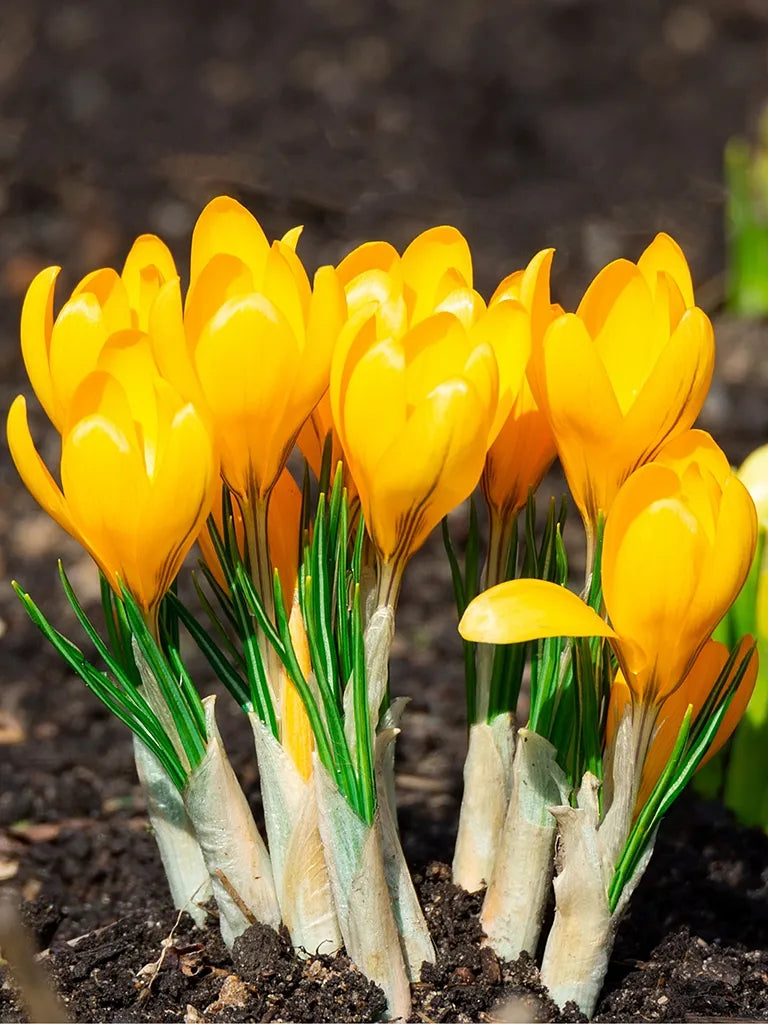
Organic yellow large-flowered crocus
Crocus flavus 'Golden Yellow' is a large-flowered crocus with intense yellow blooms. This variety grows to about 12 to 15 centimeters tall, and the flowers open up to 5 centimeters in diameter in sunny weather. Thanks to their larger flower size, they stand out even more in the garden. Each corm usually produces one or two sturdy flowers. The grass-like foliage, with a silvery-white center stripe, appears during or just after flowering, then continues to grow to about 20 centimeters tall and dies back naturally in spring.
The 'Golden Yellow' crocus blooms early in the year, in February and March. This makes it an important food source for bees and other early insects. Thanks to its striking color and early flowering, this crocus is not only beautiful but also beneficial for biodiversity in the garden. The Florilogist recommends planting this crocus in large groups to provide both color and ecological value in early spring.
How, where and when do I plant crocus corms?
Crocus corms need a period of cold to bloom. Therefore, plant them in the fall, from October to January. The planting depth should be 2 to 3 times the height of the corm itself, and the planting distance should be 2 to 3 times the width of the corm. Plant 100-120 corms per m². When planting in pots, it's important that they have drainage holes in the bottom to prevent rot.
The ideal location is full sun to partial shade. Use well-drained, fertile, and slightly calcareous sandy or loamy soil. The 'Golden Yellow' crocus is excellent for naturalizing: in grass, in borders, or under deciduous shrubs and trees. It also works well as the top layer in a "lasagna" planting with flower bulbs. Combine it with other early-flowering varieties such as blue scilla or white crocuses for a strong color contrast.
Soil pH: Slightly acidic to neutral.
Care
The Crocus 'Golden Yellow' is a vigorous naturalizer and requires little care. After flowering, always leave the leaves until they have completely yellowed and died back, so the tuber can store energy for the following year. Only cut back the foliage once it has withered naturally. For healthy growth, you can apply some organic fertilizer annually.
After flowering, crocuses form one or more new corms on top of the old ones. These can sometimes emerge above ground. In that case, replant them at the correct depth.
Propagation
Corms can be dug up in June or July for propagation. Let them dry thoroughly and store them in a dry, warm place until they can be planted again starting in September. Over the years, this will create an increasingly full patch of crocuses in the garden.
Origin of the crocus
The Crocus is native to southeastern Europe and western Asia, particularly Turkey, Bulgaria, and Greece. The cultivar 'Golden Yellow' is a cultivated variety specifically selected for its color and flower size, and has long been popular in Western Europe.
Particulars
A crocus grows from a tuber-like storage organ that can survive for several years.
Bio Crocus flavus 'Golden Yellow' ordering information
✅ Skal certified: 109459
📦 Packed per 10 tubers or choose a stacking discount!
💰 Stacking discount: E
🛒 Pre-sale - Delivery mid-September!
📬 EU Shipping €8.95 - Free shipping on orders over €100,-.
Characteristics
| Flowering period: | February - March |
| Planting time: | From September |
| Planting depth: | 7 cm deep |
| Planting distance: | 7 cm apart |
| Height: | 15 cm high |
| Flower diameter: | 5 cm wide |
| Location: | Part shade, sun |
| Soil pH: | Loam, sandy soil - Slightly alkaline/neutral |
| Winter hardiness: | Very hardy (down to -20°C) |
| Propagation: | Good (naturalizes) |
| Origin: | Turkey and the Balkan region |
| Family: | Iridaceae (Iris family) |
| Colour: | Yellow |
| Bee-friendly: | Yes |
| Fragrant: | Lightly scented |
| Bulb size: | 7+ |
Other crocus species

NL-BIO-01