Bloemoloog
Organic Crocus sativus XXL - Saffron Crocus | 7 pcs.
Organic Crocus sativus XXL - Saffron Crocus | 7 pcs.
Estimated Shipping Widget will be displayed here!
Couldn't load pickup availability
Organic Saffron Crocus
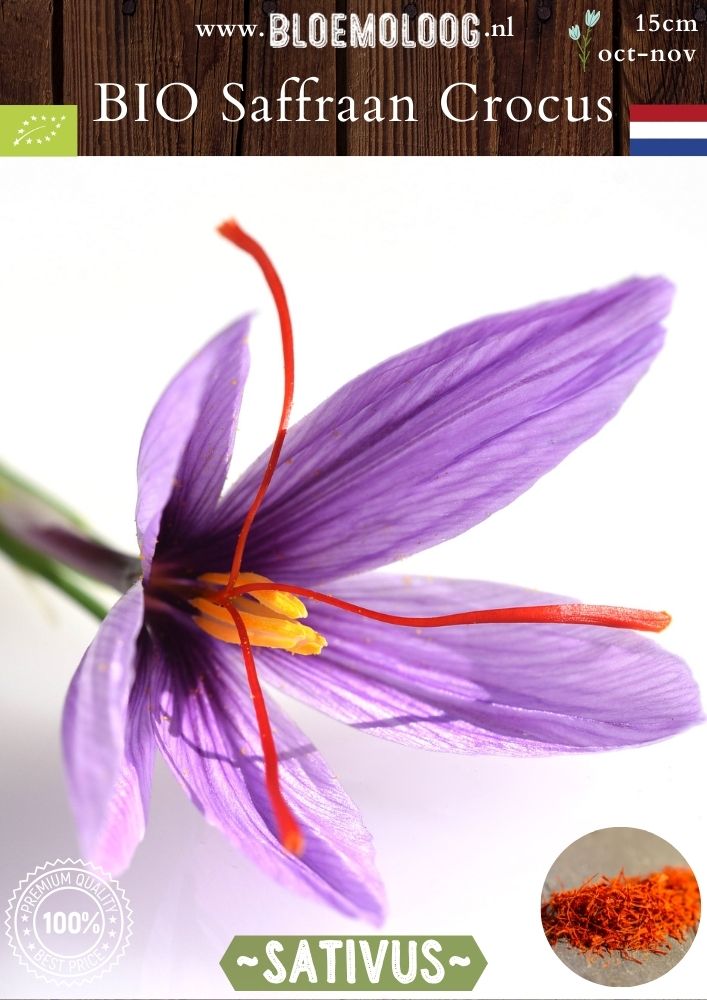
The Crocus sativus is the only true saffron crocus and is a beautiful sight in late autumn. It blooms around late October, early November, if the corm is replanted, and blooms slightly earlier if the corms have been in the ground for a year. The flower itself grows to about 15 centimeters tall and blooms in a light purple color with yellow stamens, which is a good food source for pollinators so late in the year, and the saffron, which are the red pistils (stigmas). The narrow leaves are as tall as the flower during blooming but continue to grow until April after blooming, after which they naturally die off.
Do not confuse the saffron crocus with another autumn-blooming crocus like the Crocus speciosus or the poisonous Colchicum autumnale, which also blooms in autumn!
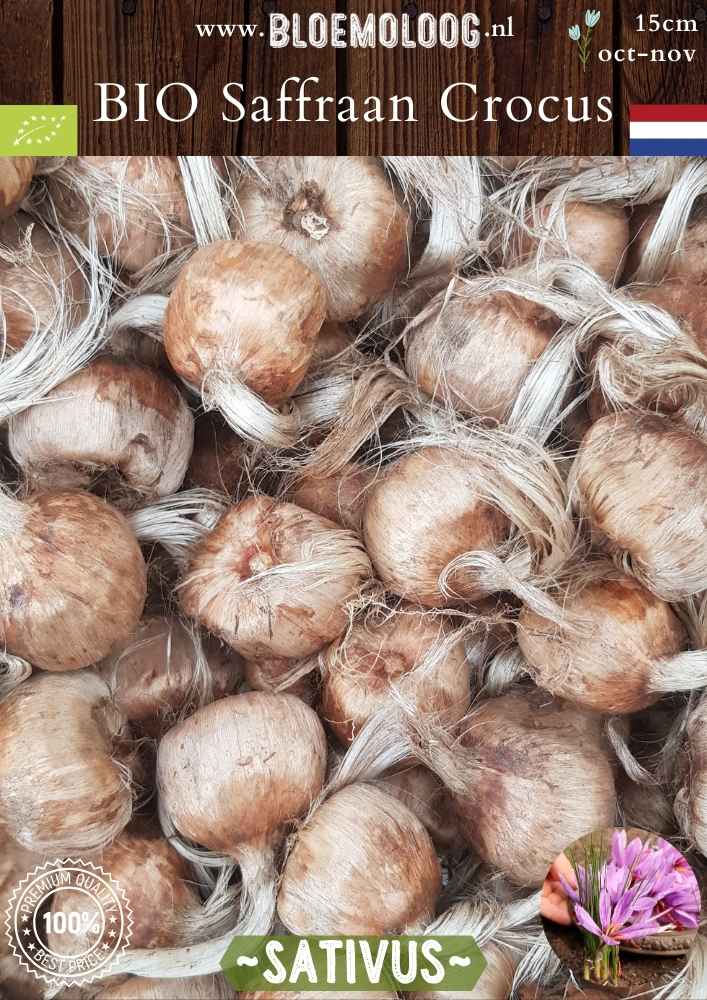
XXL Quality Saffron Crocus Corms

Bloemoloog offers large quality corms, 12+ centimeters in circumference, sometimes producing up to 3 flowers per corm, and yes, they really do produce saffron! The large corms have so much energy that they can even bloom indoors on a plate, without soil and water, due to the warmth. Make sure to plant them in the garden immediately after blooming so they can regain their strength.
Harvesting Saffron
Saffron is harvested in autumn, as soon as the purple flowers of the saffron crocus appear. The flowers are preferably picked early in the morning, when they are still closed. Then, carefully remove the three red pistils from each flower. These threads are immediately dried, for example, in a warm, dry place or in a food dehydrator. After drying, store them airtight and in the dark for at least a month for optimal flavor.
How, Where, and When Do I Plant Saffron Crocus Corms?
Saffron crocus corms are planted from September to October. The planting depth is 2 to 3 times the height of the corm, and the planting distance is 2 to 3 times the width of the corm. Plant them in groups for a beautiful effect. The best location is in full sun. Make sure they receive at least 6 hours of sunlight per day so they can gather strength for the following year.
Plant them in nutrient-rich, well-draining soil. Loamy soil is acceptable, preferably loose sandy soil. The soil should not be too heavy, as water needs to drain well to prevent corm rot.
Caring for Saffron Crocus
The corms can remain in the ground for several years of blooming if no other plants grow around them. For the best results, remove the corms from the ground in June or July and store them in a warm place in the shed. Replant the corms in September. Provide annual organic fertilization for the best results.
For organic potting soil, plant food, or other soil improvers, we recommend Bio-Kultura!
Propagating Saffron Crocus
The Crocus sativus does not propagate by seed because it is a sterile triploid hybrid. During blooming, new corms grow on top of the old corm. These can be separated in early summer to be replanted in different spots in August or September.
Organic Saffron Crocus Order Information
✅ Skal certified: 109459
📦 Packed per 7 corms or choose for bulk discount!
💰 Bulk discount: D
Characteristics
| Flowering period: | October - November |
| Planting period: | From September |
| Planting depth: | 15 cm deep |
| Planting distance: | 10 cm apart |
| Height: | 15 cm tall |
| Flower diameter: | 7 cm wide |
| Location: | Sun |
| Soil: | Loamy, sandy soil - Slightly alkaline/neutral |
| Hardiness: | Hardy |
| Propagation: | By bulb (not by seed - sterile triploid taxon) |
| Origin: | Hybrid |
| Family: | Iridaceae (Iris family) |
| Color: | Lavender with purple veins |
| Bee-friendly: | Yes |
| Fragrant: | Yes (slightly) |
| Bulb size: | 12+ |
Other crocus varieties

NL-BIO-01